If you have been diagnosed with uterine fibroids and have been told that you may need surgery, you may be wondering: Can UFE treat fibroids without removing the uterus?
The answer is yes, Uterine Fibroid Embolization (UFE) can treat symptomatic fibroids without removing the uterus in appropriately selected patients.
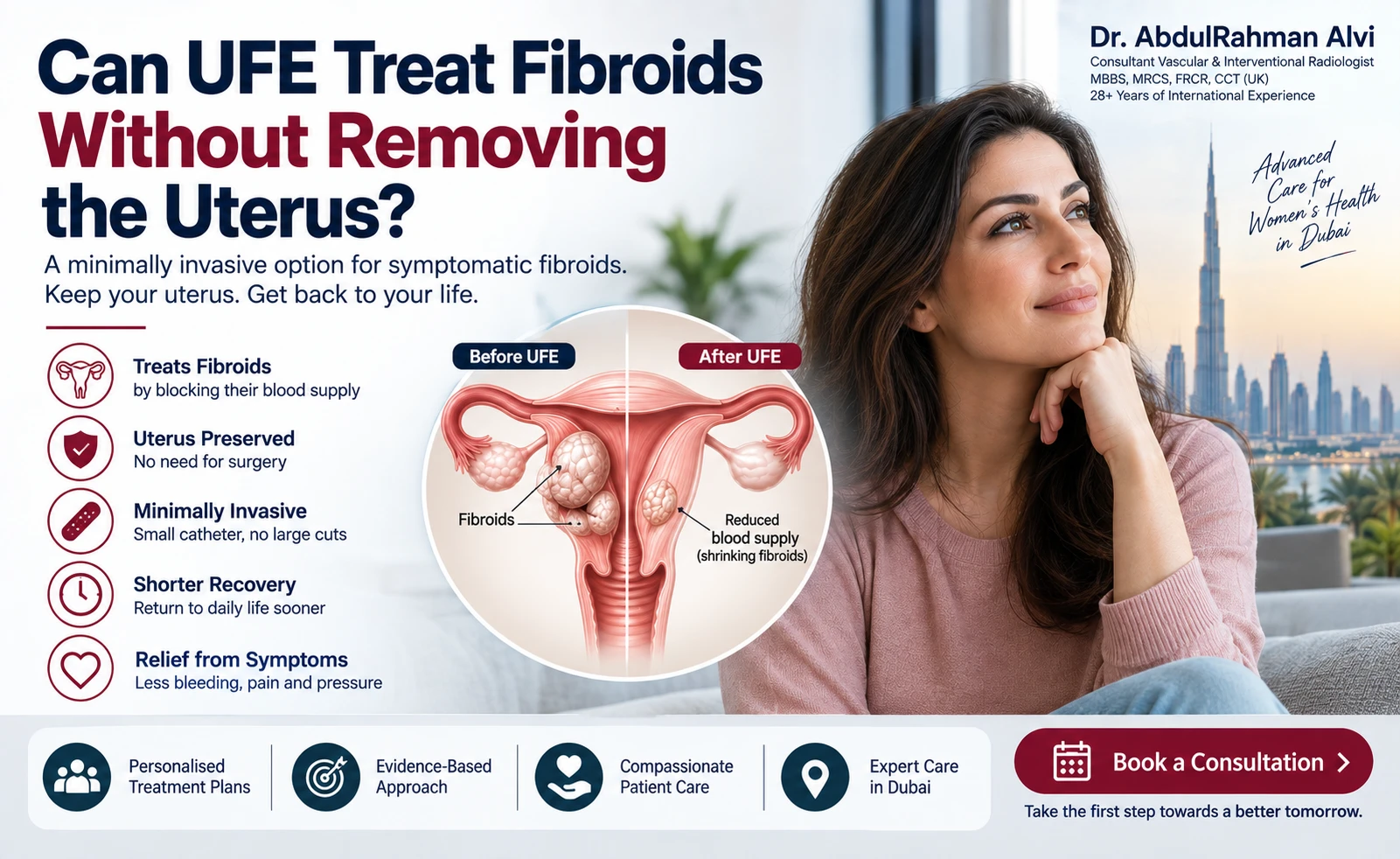
UFE is a minimally invasive, image-guided procedure that reduces the blood supply to fibroids. With less blood flow, the treated fibroids can gradually shrink, which may help improve symptoms such as heavy menstrual bleeding, pelvic pressure and pain.
Unlike a hysterectomy, UFE does not involve removing the uterus.
However, UFE is not suitable for every woman or every type of fibroid. The number, size and location of the fibroids, your symptoms, medical history, imaging findings and future pregnancy plans all need to be considered before treatment.
If you have been advised to consider hysterectomy, understanding UFE may help you discuss all appropriate treatment options with your specialist.
What Is UFE?
Uterine Fibroid Embolization (UFE) is a minimally invasive treatment for symptomatic uterine fibroids.
It is performed by an interventional radiologist using medical imaging to guide a thin catheter into the arteries supplying the uterus.
Small embolic particles are then delivered through the catheter to reduce blood flow to the fibroids.
The fibroids do not disappear immediately. Instead, they generally shrink gradually over the following weeks and months, which can help reduce fibroid-related symptoms.
UFE may be considered for women experiencing:
- Heavy or prolonged menstrual bleeding
- Pelvic pressure or fullness
- Pelvic pain
- Abdominal bloating
- Frequent urination caused by pressure from fibroids
- Period-related discomfort
- Anaemia associated with heavy menstrual bleeding
- Symptoms caused by multiple fibroids
One of the main advantages of UFE is that the uterus remains in place.
Can UFE Treat Fibroids Without Removing the Uterus?
Yes.
This is one of the main reasons women consider UFE.
A hysterectomy removes the uterus. UFE takes a different approach by targeting the blood supply to the fibroids.
The procedure does not require the uterus to be removed, and it does not involve surgically cutting out each individual fibroid.
Instead, the interventional radiologist uses a catheter to reach the uterine arteries and deliver small particles that reduce blood flow to the fibroids.
Over time, the treated fibroids generally shrink.
For selected women, this can provide an alternative to major surgery while preserving the uterus.
However, preserving the uterus does not automatically mean preserving fertility. If you are planning a future pregnancy, this needs to be discussed carefully before deciding on UFE.
How Does UFE Work?
Understanding how UFE works makes the treatment easier to understand.
The procedure generally follows these steps:
1. Assessment and Imaging
Before treatment, your specialist reviews your symptoms, medical history and previous investigations.
Ultrasound is commonly used to identify fibroids. MRI may also be recommended when more detailed information about the number, size and location of the fibroids is needed.
2. Catheter Placement
During UFE, a thin catheter is introduced through a small blood-vessel access point, commonly through the wrist or groin.
3. Identifying the Uterine Arteries
Using real-time imaging, the catheter is guided into the arteries supplying the uterus and fibroids.
4. Reducing Blood Flow to the Fibroids
Small embolic particles are delivered through the catheter to reduce blood flow to the fibroids.
5. Fibroid Shrinkage
With their blood supply reduced, the treated fibroids gradually shrink over time.
The goal is not to remove the uterus but to reduce the impact of the fibroids and improve symptoms.
What Happens to the Uterus After UFE?
The uterus remains in place after UFE.
This is an important difference between UFE and hysterectomy.
The aim of UFE is to treat the fibroids while preserving the uterus. The fibroids may become smaller and softer as their blood supply is reduced.
The uterus itself is not surgically removed.
For women who have been advised to consider hysterectomy but want to explore a uterus-preserving option, this can make UFE an important treatment to discuss with an interventional radiologist.
UFE vs Hysterectomy: What Is the Difference?
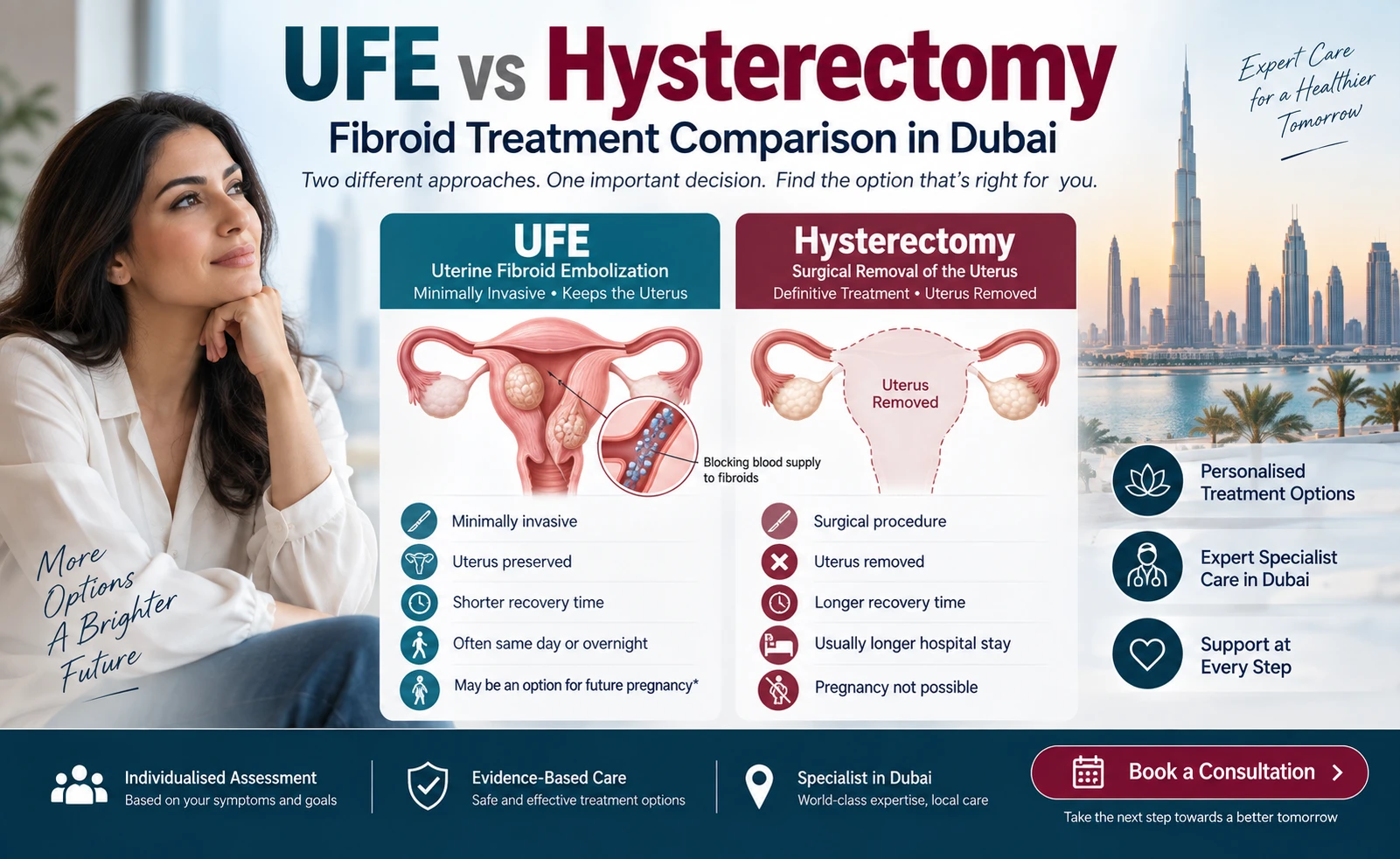
Although both treatments can be used for symptomatic fibroids, they work very differently.
| UFE | Hysterectomy |
|---|---|
| Minimally invasive procedure | Surgical procedure |
| Uterus remains in place | Uterus is removed |
| Blood supply to fibroids is reduced | Uterus containing fibroids is removed |
| Uses a thin catheter | Requires surgery |
| Usually no large abdominal incision | Surgical approach varies |
| Recovery is generally shorter | Recovery is generally longer |
| Future pregnancy requires individual discussion | Pregnancy is not possible after removal of the uterus |
| Fibroids are treated without removing the uterus | Provides definitive removal of the uterus |
Neither treatment is automatically the right choice for every patient.
The decision should take into account your symptoms, fibroid characteristics, health, treatment goals and reproductive plans.
Is UFE a Non-Surgical Treatment?
UFE is commonly described as a minimally invasive, non-surgical treatment because it does not require an open surgical operation to remove the uterus or fibroids.
However, it is still an invasive medical procedure involving vascular access and image guidance.
A catheter is inserted through a blood vessel, and embolic particles are delivered to the arteries supplying the fibroids.
This means UFE avoids the type of major surgery involved in hysterectomy, but it is not completely risk-free.
Your specialist should explain the potential benefits, limitations and risks before treatment.
Is UFE Suitable for Multiple Fibroids?
UFE may be considered for women who have multiple symptomatic fibroids.
Because UFE targets the blood supply rather than removing each fibroid individually, several fibroids can potentially be treated during the same procedure.
However, having multiple fibroids does not automatically make you a suitable candidate.
Your specialist may consider:
- Number of fibroids
- Size of each fibroid
- Location of the fibroids
- Type and appearance of the fibroids
- Severity of symptoms
- Results of ultrasound or MRI
- Previous fibroid treatments
- Overall health
- Future pregnancy plans
This is why proper imaging and specialist assessment are important before treatment.
What Symptoms Can UFE Help With?
UFE is generally considered for symptomatic fibroids, rather than fibroids that are causing no problems.
Symptoms may include:
Heavy Menstrual Bleeding
Fibroids can cause periods that are unusually heavy or prolonged. Significant menstrual blood loss may also contribute to anaemia.
Pelvic Pressure
Larger fibroids may create a feeling of heaviness, pressure or fullness in the lower abdomen.
Pelvic Pain
Some women experience pelvic discomfort or period-related pain associated with fibroids.
Frequent Urination
A fibroid pressing against the bladder may contribute to increased urinary frequency.
Abdominal Fullness or Bloating
Larger fibroids can sometimes make the abdomen feel enlarged or uncomfortable.
Not every symptom is caused by fibroids, so a proper medical assessment is important before treatment.
How Long Does It Take for Fibroids to Shrink After UFE?
Fibroids do not usually shrink immediately after the procedure.
The process takes time.
Some symptoms may begin improving during the first few weeks, while other improvements may take longer. Fibroids can continue to shrink over the following months.
The exact response varies according to the individual patient and the characteristics of the fibroids.
Your specialist may recommend follow-up appointments and imaging to assess how the fibroids have responded.
What Is Recovery Like After UFE?
Recovery after UFE is different for every patient.
Some women experience cramping and pelvic discomfort during the first few days. Other temporary symptoms can include:
- Fatigue
- Nausea
- Mild fever
- Pelvic cramps
- Temporary changes in menstrual bleeding
- Discomfort around the catheter access site
Some patients can leave the hospital on the same day, while others may stay overnight depending on their condition and pain control needs.
Many patients gradually return to normal activities within around one to two weeks, although your individual recovery may be shorter or longer.
Your doctor will provide specific instructions about medication, physical activity, follow-up and when to seek medical attention.
Is UFE Painful?
Some discomfort is expected after UFE.
Pelvic cramping can occur as the fibroids respond to the reduction in blood supply. The level of discomfort varies between patients.
Pain medication is commonly used to help manage symptoms during the early recovery period.
Before the procedure, your specialist should explain what to expect and how pain will be managed.
If severe or unexpected pain develops after treatment, you should contact your medical team.
Can UFE Replace a Hysterectomy?
For some women, UFE may provide an alternative to hysterectomy for symptomatic fibroids.
However, it is important not to describe UFE as a replacement for hysterectomy in every patient.
Hysterectomy remains an established treatment and may be appropriate when:
- Definitive surgical treatment is preferred
- Other treatments are unsuitable
- Fibroid-related symptoms are severe
- Another uterine condition requires surgery
- The patient’s individual clinical situation makes surgery more appropriate
UFE and hysterectomy have different benefits, limitations and implications.
The goal should be to identify the treatment that is most appropriate for your individual situation.
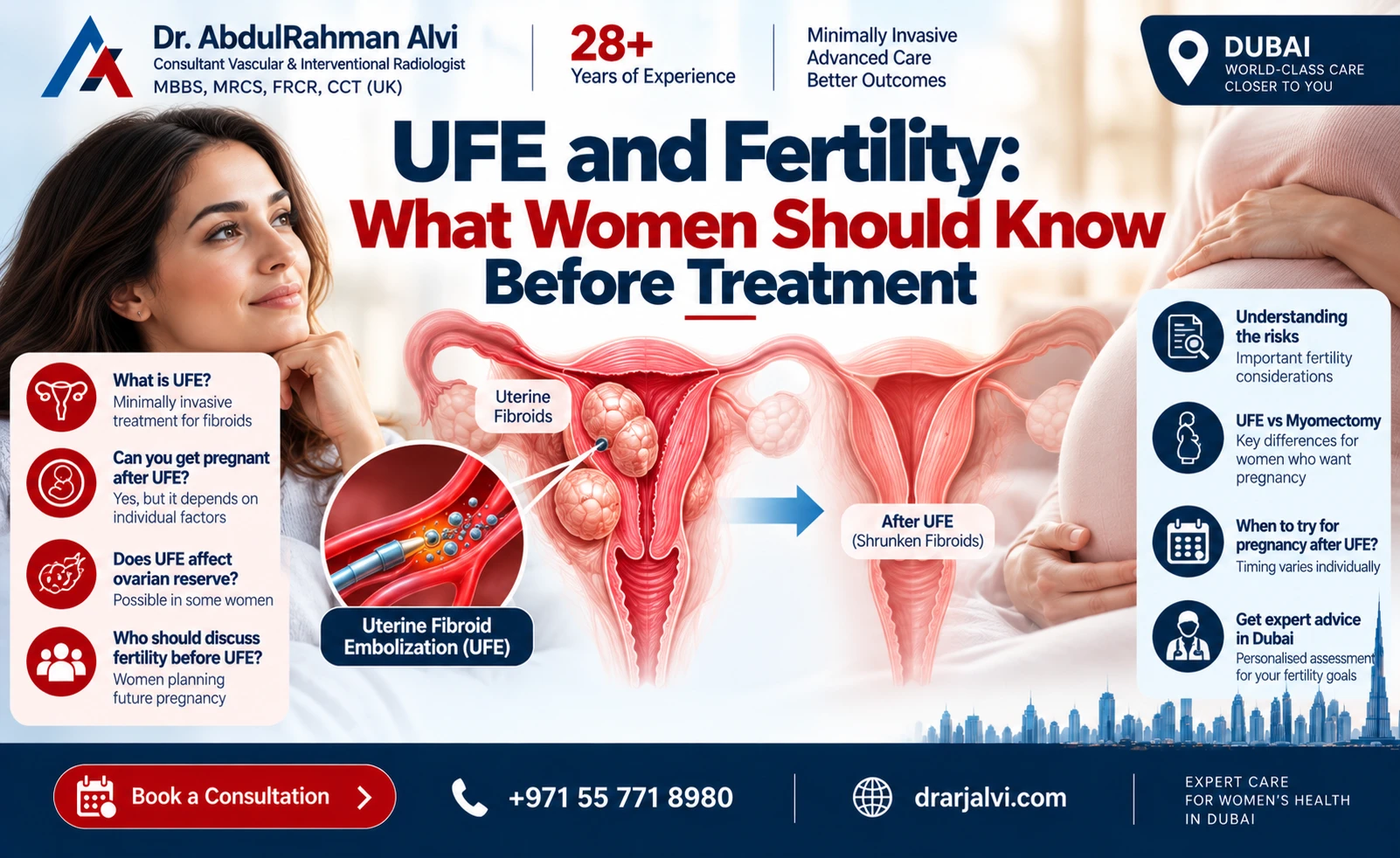
Can UFE Preserve Fertility?
This is one of the most important questions to discuss before UFE.
UFE preserves the uterus, but that does not mean that future fertility is guaranteed.
Pregnancy is possible after UFE, but the effect of UFE on fertility and pregnancy outcomes remains an important consideration.
For women who actively want future pregnancy, myomectomy may sometimes be preferred when surgery is safe and technically suitable.
This decision depends on several factors, including:
- Age
- Fibroid location
- Number of fibroids
- Fibroid size
- Previous treatments
- Fertility history
- Overall health
- Future pregnancy plans
If having children in the future is important to you, tell your specialist before choosing UFE.
Who May Be a Good Candidate for UFE?
UFE may be considered when:
- You have symptomatic uterine fibroids
- Your symptoms are affecting your quality of life
- Medication has not provided adequate relief
- You want to explore a minimally invasive treatment
- You want to keep your uterus
- Imaging suggests that UFE may be technically appropriate
- You understand the benefits, limitations and risks
- Your treatment goals are compatible with UFE
There is no single checklist that can determine suitability without a medical assessment.
Your specialist needs to review your symptoms and imaging before recommending treatment.
Who May Not Be Suitable for UFE?
UFE is not appropriate for every woman.
Your specialist may recommend another treatment if there are factors such as:
- Pregnancy
- Active pelvic infection
- Suspected pelvic malignancy
- Certain medical or vascular conditions
- Fibroid characteristics that make embolization unsuitable
- Treatment goals that are better addressed with another approach
Future pregnancy plans are also an important part of the discussion.
This is why UFE should be considered after appropriate medical evaluation rather than based only on symptoms or an online article.
What Tests Are Needed Before UFE?
A proper assessment is an important part of deciding whether UFE is appropriate.
Ultrasound
Ultrasound can identify fibroids and provide information about their size and location.
MRI
MRI may be recommended when more detailed mapping is needed, particularly when treatment planning requires information about multiple fibroids or their exact locations.
Blood Tests
Blood tests may be recommended depending on your symptoms and medical history. Heavy menstrual bleeding, for example, may be associated with anaemia.
Medical History
Your doctor may ask about previous treatments, medications, pregnancies, menstrual symptoms and future fertility plans.
Specialist Consultation
Your symptoms, imaging and overall health are considered together before a treatment recommendation is made.
What Are the Risks of UFE?
UFE is considered an established treatment for symptomatic fibroids, but like any medical procedure, it carries potential risks.
Possible complications or side effects may include:
- Pain and cramping
- Nausea
- Fever
- Bleeding or bruising at the catheter site
- Infection
- Blood-vessel complications
- Temporary menstrual changes
- Effects on ovarian function in some women
- The need for additional treatment
Rare complications can require further medical treatment.
Your specialist should explain the risks relevant to your individual case before you decide whether to proceed.
What If UFE Does Not Relieve My Symptoms?
UFE can be effective for many women, but no treatment guarantees that symptoms will disappear permanently.
Some patients may have persistent symptoms, incomplete response or develop further fibroid-related problems later.
In some cases, additional treatment may be required.
This is another reason why follow-up is important.
If symptoms do not improve as expected, your specialist can reassess the situation and discuss whether another treatment may be appropriate.
UFE in Dubai: Why Specialist Assessment Matters
Choosing the right treatment for fibroids is not simply about choosing the least invasive option.
It is about finding an approach that fits your medical condition and personal goals.
Dr Abdul Rahman Alvi is a UK-trained Consultant Vascular & Interventional Radiologist in Dubai with 28+ years of international clinical experience.
His qualifications include:
- MBBS
- MRCS
- FRCR
- CCT (UK)
- Dual CCT in Interventional & Clinical Radiology
His specialist training includes experience in the UK, including Sheffield University Teaching Hospitals and advanced fellowship training at the Royal Free Hospital in London.
For women considering UFE, a specialist consultation can help review your imaging, symptoms and treatment goals and determine whether UFE may be an appropriate option.
You can learn more about Dr Abdul Rahman Alvi and his specialist experience before arranging a consultation.
What Should You Ask Before Choosing UFE?
Before deciding on UFE, consider asking your specialist:
- Are my symptoms definitely caused by fibroids?
- How many fibroids do I have?
- What are their sizes and locations?
- Is UFE suitable for my particular fibroids?
- Would another treatment be better for me?
- How could UFE affect my future pregnancy plans?
- What should I expect during recovery?
- What are the risks in my individual case?
- Will I need follow-up imaging?
- Could I need additional treatment later?
These questions can help you understand whether UFE fits your goals.
Can UFE Treat Fibroids Without Removing the Uterus? The Bottom Line
Yes, UFE can treat symptomatic uterine fibroids without removing the uterus in appropriately selected patients.
The procedure works by reducing the blood supply to the fibroids, allowing them to gradually shrink while the uterus remains in place.
For some women, UFE may provide an alternative to hysterectomy and avoid major surgery. However, it is not suitable for everyone, and preserving the uterus does not guarantee preservation of fertility.
The right treatment depends on your fibroid characteristics, symptoms, medical history, imaging and future pregnancy plans.
If you have been told that you may need a hysterectomy, it can be worthwhile to ask whether UFE or another uterus-preserving treatment should be considered in your case.
Want to know whether UFE may be suitable for your fibroids? Book a consultation with Dr Abdul Rahman Alvi in Dubai for an individual assessment and discussion of your treatment options.