Uterine fibroids are non-cancerous growths that develop in the muscular wall of the uterus. They are extremely common — research suggests up to three in four women develop fibroids at some point before menopause — though only around one in four go on to develop symptoms significant enough to need treatment. For women who do experience symptoms, the most common complaint is heavy or prolonged menstrual bleeding, often accompanied by pelvic pain, pressure, or frequent urination.
For many years, the standard treatment for symptomatic fibroids was surgical: either a myomectomy, which removes the fibroids individually, or a hysterectomy, which removes the uterus entirely. Uterine Fibroid Embolization (UFE) has since become a widely used, evidence-based alternative that treats fibroids without open surgery, without removing the uterus, and with a substantially shorter recovery period.
This page explains what UFE involves, who it’s suitable for, what the procedure and recovery look like, and what influences its cost in Dubai.
UFE is a minimally invasive, image-guided procedure performed by an interventional radiologist. Rather than removing the fibroid surgically, UFE works by cutting off its blood supply. A thin catheter is guided — under real-time X-ray imaging — into the uterine arteries that feed the fibroids. Tiny particles, roughly the size of grains of sand, are then released into these vessels. Once the blood supply is blocked, the fibroid gradually shrinks over the following weeks and months.
Because the procedure is performed through a single small puncture, typically in the wrist or groin, there are no surgical incisions in the abdomen, and general anaesthesia is not required.
UFE may be a suitable option for women who are experiencing:
Not every fibroid is suited to embolization — the size, number, and location of the fibroids, along with a woman’s individual health and future fertility plans, all factor into whether UFE is the right choice. This is why a consultation, including a review of imaging (usually ultrasound or MRI), is an essential first step rather than something that can be judged from symptoms alone.
UFE is typically performed as a day-case procedure under local anaesthesia, often combined with sedation to keep the patient comfortable throughout. The steps generally follow this sequence:
The procedure itself generally takes between 45 and 90 minutes, depending on the number and location of the fibroids being treated.
Most women experience some cramping and pelvic discomfort in the first few days after the procedure, similar to period pain, which is managed with pain medication. This is a normal part of the healing process as the fibroids begin to shrink.
Compared with surgical alternatives, recovery from UFE is notably shorter. Many women return to light activities within a few days and to their normal daily routine within one to two weeks — compared with a typical recovery period of four to six weeks following a hysterectomy. Full symptom improvement, however, tends to unfold gradually, as fibroids continue shrinking over the following months.
The cost of Uterine Fibroid Embolization in Dubai is not a single fixed figure — it depends on several factors, including the number and size of the fibroids being treated, the complexity of the procedure, pre-procedure imaging and consultation fees, and any follow-up care required. Health insurance in the UAE frequently provides partial or full coverage for UFE when it is deemed medically necessary, though this varies by provider and plan.
Because of these variables, the most reliable way to understand your specific cost is through a consultation with Dr. Alvi’s clinic, where an individualised estimate can be provided based on your imaging and treatment plan.
As with any medical procedure, UFE carries some risks, which should be discussed individually during a consultation. These can include post-procedure pain, a small risk of infection, and — in rare cases — an effect on ovarian function. UFE is also not appropriate for every fibroid or every patient; factors such as fibroid location, size, and a woman’s future fertility plans all need to be carefully weighed. This page is intended to provide general information and does not replace individualised medical advice — a consultation is necessary to determine whether UFE is the right treatment for your specific situation.
Dr. AbdulRahman Alvi is a UK-trained Consultant Vascular and Interventional Radiologist and a leading specialist in Uterine Fibroid Embolization in Dubai, with 28 years of international clinical experience. He holds dual accreditation from the Royal College of Surgeons of England and the Royal College of Radiologists (MBBS, MRCS, FRCR, Dual CCT-UK), and is registered with the Dubai Health Authority (License No. 13256111). He is rated 5 out of 5 stars across 18 verified patient reviews on Doctify.
Most patients experience mild-to-moderate cramping in the days following the procedure, which is managed with pain medication. This is generally less painful, and shorter-lived, than recovery from surgery.
Most patients return to normal daily activities within one to two weeks, compared with four to six weeks typically needed after a hysterectomy.
UFE preserves the uterus, but its effect on future fertility varies by individual case and should be discussed directly with Dr. Alvi based on the size, number, and location of your fibroids.
Many UAE insurance plans provide partial or full coverage for UFE when it is medically necessary. Coverage varies by provider, so it’s best to confirm directly with your insurer and the clinic team.
Cost depends on the number and size of fibroids, procedure complexity, and any required follow-up care. A consultation with Dr. Alvi’s clinic will provide an accurate, personalised estimate.
Unlike myomectomy or hysterectomy, UFE is non-surgical — performed through a small needle puncture with no incisions, no general anaesthesia, and a shorter recovery period.
Specialist
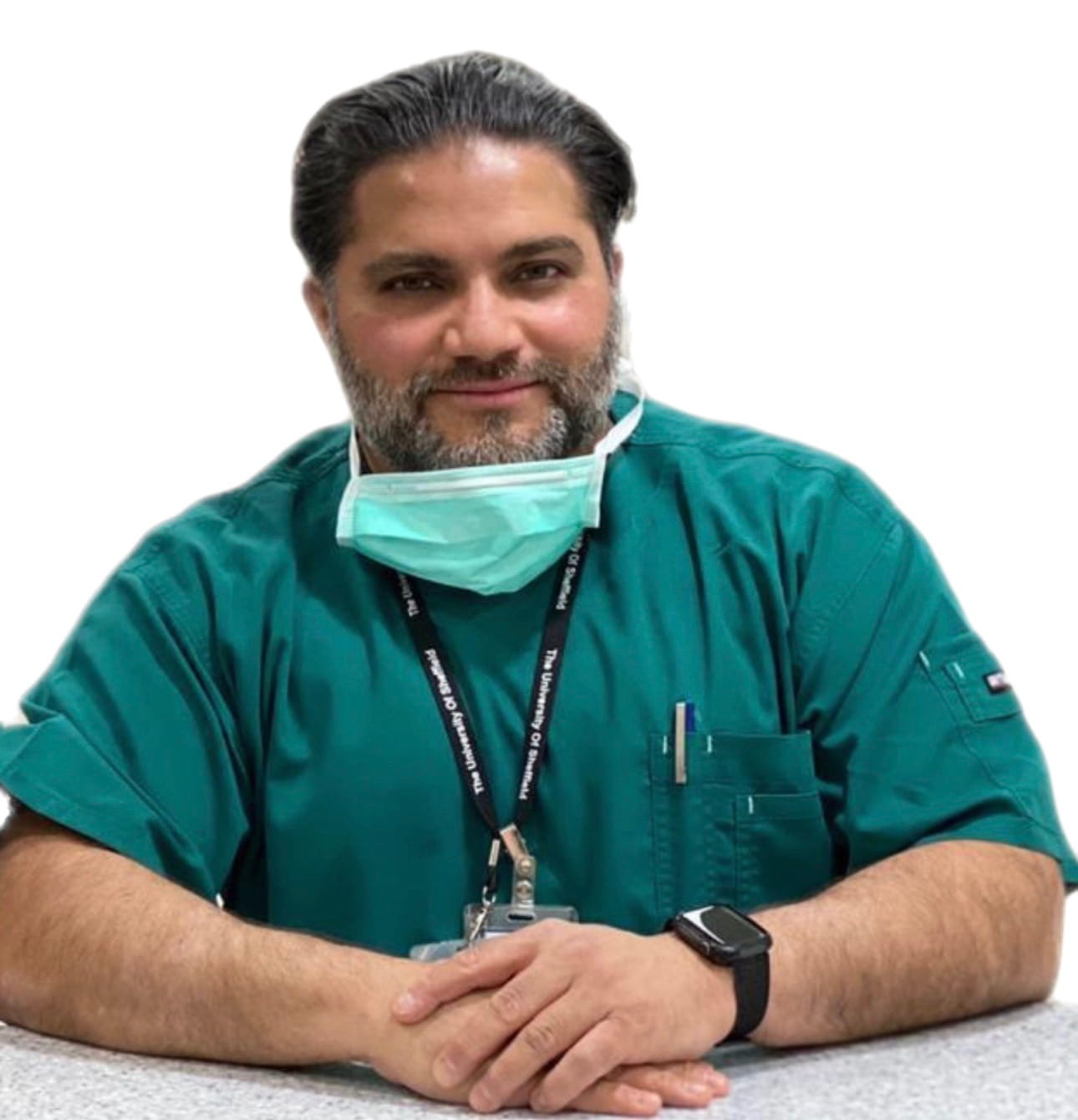
Dr. AbdulRahman Alvi
MBBS, MRCS, FRCR, CCT-UK — Dual CCT in Interventional & Clinical Radiology | 28 Years of Experience
Dr Abdul Rahman Alvi — UK-Trained Consultant Interventional Radiologist in Dubai, offering minimally invasive, non-surgical treatment for vascular, oncology, and joint conditions.
Locations
Copyright@ All rights Reserved by drarjalvi.com