 Persistent pelvic pain can have a significant impact on your daily life, making it difficult to work, exercise, care for your family, or enjoy everyday activities. Many women spend months—or even years—searching for answers, often being treated for conditions such as endometriosis, fibroids, or hormonal disorders without finding lasting relief.
One frequently overlooked cause of chronic pelvic pain is Pelvic Congestion Syndrome (PCS), a condition caused by enlarged and damaged pelvic veins that allow blood to pool within the pelvis. Similar to varicose veins in the legs, these abnormal veins become stretched and congested, creating pressure and discomfort that can worsen over time. In men, the same vein problem in the scrotum is called a varicocele and is treated with a similar embolization procedure.
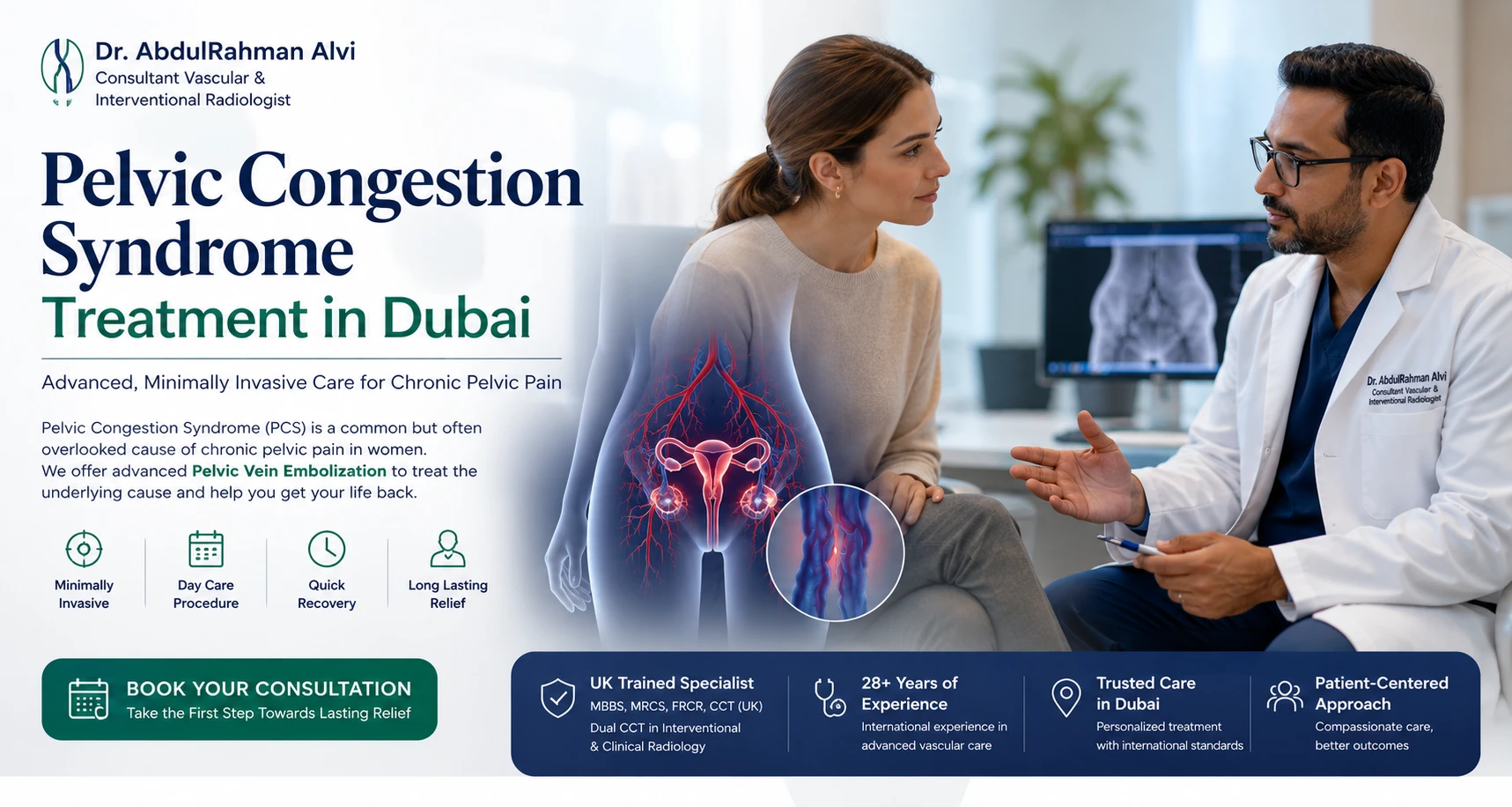
At Dr. AbdulRahman Alvi’s clinic in Dubai, we offer minimally invasive Pelvic Vein Embolization, an advanced image-guided treatment designed to close the affected veins and relieve symptoms without major surgery.
As a UK-trained Consultant Vascular & Interventional Radiologist, Dr. AbdulRahman Alvi has more than 28 years of international clinical experience in performing advanced embolization procedures using the latest interventional radiology techniques. Every treatment plan is tailored to the individual patient, ensuring a comprehensive evaluation and evidence-based care.
If you’ve been living with unexplained pelvic pain or have been told that “everything looks normal” despite ongoing symptoms, a specialist assessment may help identify whether Pelvic Congestion Syndrome is the underlying cause.
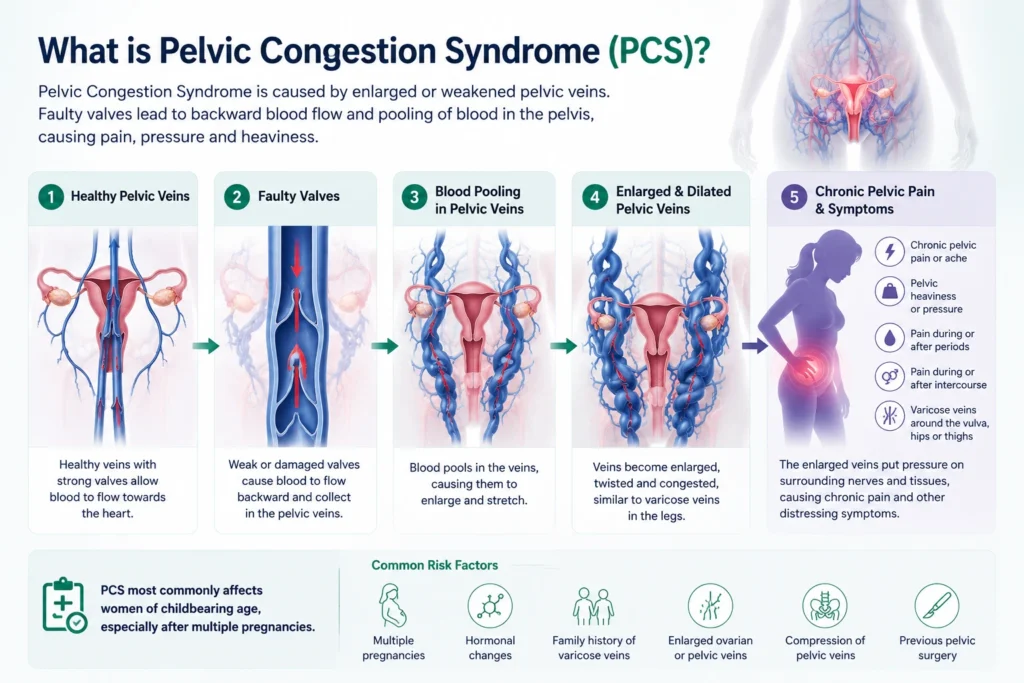
Pelvic Congestion Syndrome (PCS) is a chronic condition caused by enlarged or weakened veins within the pelvis. When the valves inside these veins fail to function properly, blood flows backward and collects in the pelvic veins instead of returning efficiently to the heart. This increased pressure causes the veins to enlarge, leading to persistent pelvic pain and other uncomfortable symptoms.
PCS most commonly affects women of childbearing age, particularly those who have had multiple pregnancies. During pregnancy, pelvic veins naturally expand to accommodate increased blood flow. In some women, these veins fail to return to their normal size after childbirth, resulting in long-term venous congestion.
Because the symptoms of Pelvic Congestion Syndrome often overlap with those of other gynecological conditions, the diagnosis is frequently delayed or missed altogether. Many women undergo repeated consultations and investigations before the correct diagnosis is made.
Fortunately, advances in Interventional Radiology now provide a safe, effective, and minimally invasive alternative to surgery through Pelvic Vein Embolization, helping many patients achieve long-term symptom relief with minimal downtime.
Pelvic Congestion Syndrome can cause a wide range of symptoms that often worsen as the day progresses or after standing for long periods.
You should consider a specialist evaluation if you experience:
Although these symptoms can be associated with several conditions, they may indicate Pelvic Congestion Syndrome, particularly if routine gynecological examinations have not identified another clear cause.
Many women with Pelvic Congestion Syndrome are treated repeatedly for other conditions before the underlying problem is recognised. As a result, they may continue to experience chronic pain that affects their physical health, emotional well-being, relationships, and quality of life.
Early diagnosis is important because it allows patients to access targeted, minimally invasive treatment before symptoms become more severe. Rather than simply managing the pain with medication, Pelvic Vein Embolization addresses the underlying cause by treating the abnormal veins responsible for venous congestion.
If chronic pelvic pain is affecting your everyday life, seeking an assessment from an experienced Consultant Vascular & Interventional Radiologist may help determine whether Pelvic Congestion Syndrome is contributing to your symptoms.
Pelvic Congestion Syndrome develops when the veins responsible for draining blood from the pelvis become enlarged or weakened. Normally, small valves inside these veins ensure that blood flows back toward the heart. When these valves fail, blood flows backwards and pools within the pelvic veins, causing increased pressure and vein enlargement.
This condition is similar to varicose veins in the legs, but instead affects the veins surrounding the uterus, ovaries, and other pelvic organs.
Several factors may increase the risk of developing Pelvic Congestion Syndrome, including:
Although PCS can affect women of different ages, it is most commonly diagnosed in women between 20 and 50 years old, particularly those who have had two or more pregnancies.
Because the symptoms of Pelvic Congestion Syndrome are similar to those of several gynecological and urinary conditions, an accurate diagnosis requires a thorough evaluation by an experienced specialist.
At your consultation, Dr. AbdulRahman Alvi will review your symptoms, medical history, previous investigations, and imaging studies before recommending the most appropriate treatment.
Depending on your symptoms, your evaluation may include:
Understanding when your pain occurs, how long it lasts, and what makes it worse or better is often the first step in identifying PCS.
Ultrasound may identify enlarged pelvic veins and help exclude other common causes of pelvic pain.
Advanced imaging provides detailed views of the pelvic veins and helps identify enlarged ovarian veins, venous reflux, or compression of surrounding blood vessels.
Venography is considered the most accurate method for confirming Pelvic Congestion Syndrome. During this minimally invasive imaging procedure, contrast dye is injected into the pelvic veins, allowing the specialist to assess blood flow and identify abnormal or refluxing veins.
Venography is often performed immediately before Pelvic Vein Embolization, allowing diagnosis and treatment during the same session when appropriate.
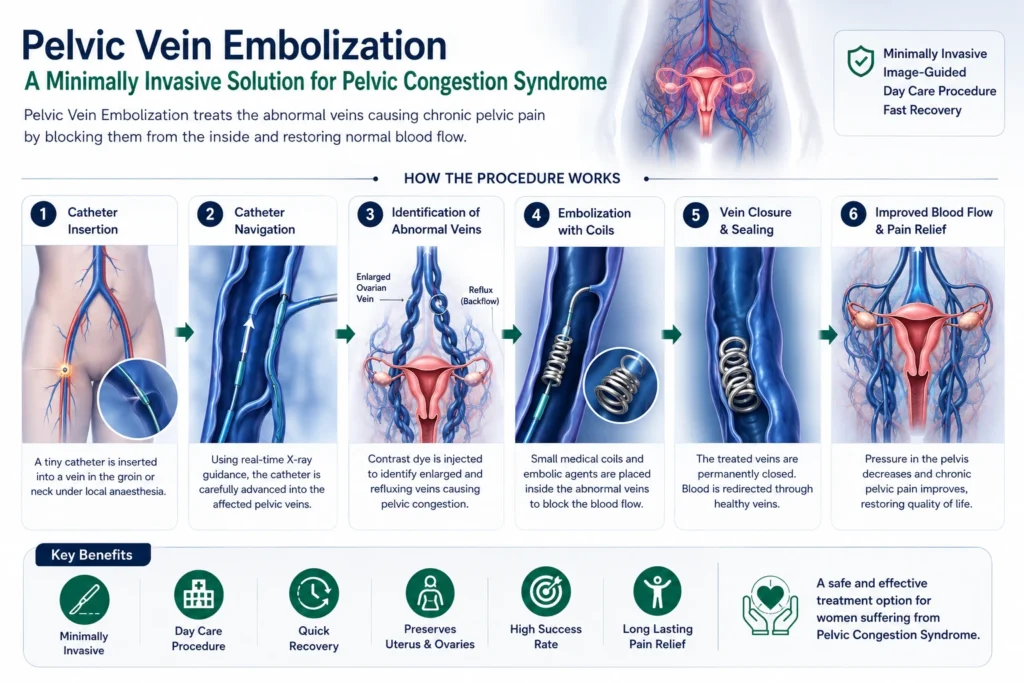
Pelvic Vein Embolization is a minimally invasive, image-guided procedure used to treat Pelvic Congestion Syndrome by closing the abnormal veins responsible for chronic pelvic pain.
Instead of removing veins through surgery, embolization blocks the diseased veins from the inside using tiny medical coils and specialized embolic agents. Once these veins are sealed, blood is naturally redirected through healthy veins, reducing pressure within the pelvis and relieving symptoms.
Because the treatment targets the underlying cause of venous congestion rather than simply masking the pain, many patients experience long-term improvement in their symptoms.
The procedure is performed by a Consultant Vascular & Interventional Radiologist using advanced imaging technology to ensure accurate placement of the embolization materials.
The procedure is performed through a tiny catheter inserted into a vein in the neck or groin.
Using real-time X-ray guidance, the catheter is carefully advanced into the affected ovarian or pelvic veins. Once the abnormal veins are identified, small medical coils and embolic materials are placed inside them to stop the backward flow of blood.
Over time:
Because no large incision is required, embolization offers a less invasive alternative to open surgery with a shorter recovery period.
Many patients are surprised to learn that Pelvic Vein Embolization is performed without major surgery and usually does not require an overnight hospital stay.
Your symptoms and imaging studies are reviewed to confirm that Pelvic Congestion Syndrome is the cause of your pain.
The procedure is usually performed under local anaesthesia with light sedation when required, helping keep you comfortable throughout treatment.
A tiny catheter is inserted through a vein in the neck or groin and guided to the affected pelvic veins using advanced imaging.
Medical coils and embolic agents are placed into the abnormal veins, closing them permanently and preventing further blood pooling.
After a short observation period, most patients are able to return home on the same day with detailed aftercare instructions.
Compared with conventional surgery, Pelvic Vein Embolization offers several important advantages:
You may benefit from Pelvic Vein Embolization if you:
Every patient is different. During your consultation, Dr. AbdulRahman Alvi will carefully evaluate your condition and determine whether Pelvic Vein Embolization is the most appropriate treatment for your individual needs.