Varicose veins are enlarged, twisted veins that most commonly appear in the legs. They can be more than a cosmetic concern, especially when they cause aching, heaviness, swelling, itching or discomfort that becomes worse after standing or walking. Varicose veins are usually caused by chronic venous insufficiency. Similar veins can also develop in the pelvis, causing pelvic congestion syndrome.
At Dr. AbdulRahman Alvi’s practice in Dubai, patients with varicose veins can receive specialist vascular assessment and an individualised treatment plan based on their symptoms, venous anatomy and underlying blood-flow problems.
Modern treatment options can often address problematic veins through minimally invasive, image-guided procedures, avoiding the need for traditional open vein surgery in appropriately selected patients.
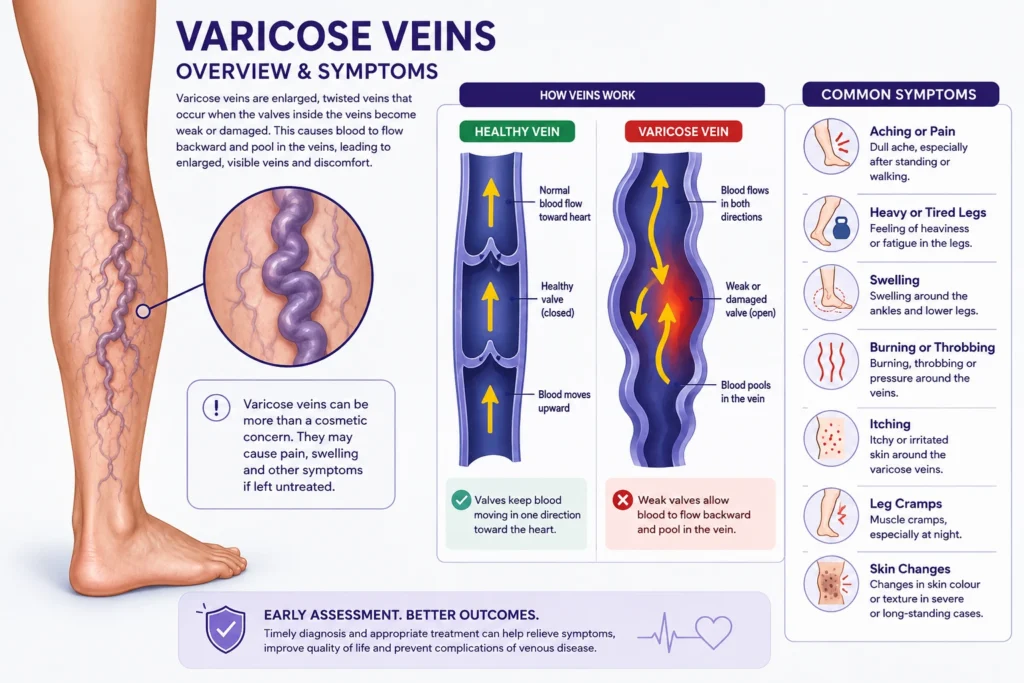
Varicose veins develop when the valves inside the leg veins do not work effectively.
These valves normally help blood move upward toward the heart and prevent it from flowing backward. When the valves become weak or incompetent, blood can collect within the veins. Over time, this increased pressure can cause the veins to enlarge, twist and become visible beneath the skin.
Varicose veins may appear as blue, purple or skin-coloured veins and can range from small surface veins to larger, bulging veins.
Some people have no symptoms, while others experience ongoing discomfort or develop complications related to chronic venous disease.
Varicose veins can affect people differently. Common symptoms include:
A dull, aching sensation may develop in the affected leg, particularly after prolonged standing or physical activity.
The legs may feel heavy, tired or uncomfortable, especially toward the end of the day.
Swelling around the ankles and lower legs can become more noticeable after standing or sitting for long periods.
Some patients experience burning, throbbing or pressure around the affected veins.
The skin around a varicose vein may become itchy or irritated.
Some people experience cramps or discomfort in the legs, particularly at night.
Long-standing venous problems can sometimes cause changes in skin colour or texture around the ankle and lower leg.
If these symptoms are persistent or affecting your daily activities, a vascular assessment can help determine whether underlying venous reflux is responsible.
The main cause of many varicose veins is venous valve dysfunction.
When the valves inside the veins become weak, blood can flow backward and pool in the lower limbs. This abnormal backward flow is known as venous reflux.
Several factors can increase the likelihood of developing varicose veins:
In many cases, there is not one single cause. A detailed assessment is therefore important before deciding on treatment.
A specialist assessment begins with your symptoms, medical history and physical examination.
The legs may be examined while standing because varicose veins and swelling can become more visible in this position.
A venous duplex ultrasound is an important part of assessing varicose veins.
It allows the specialist to examine blood flow through the veins and identify abnormal reflux.
The scan can help determine:
This information is important because treating only the visible veins may not address the underlying source of the problem.
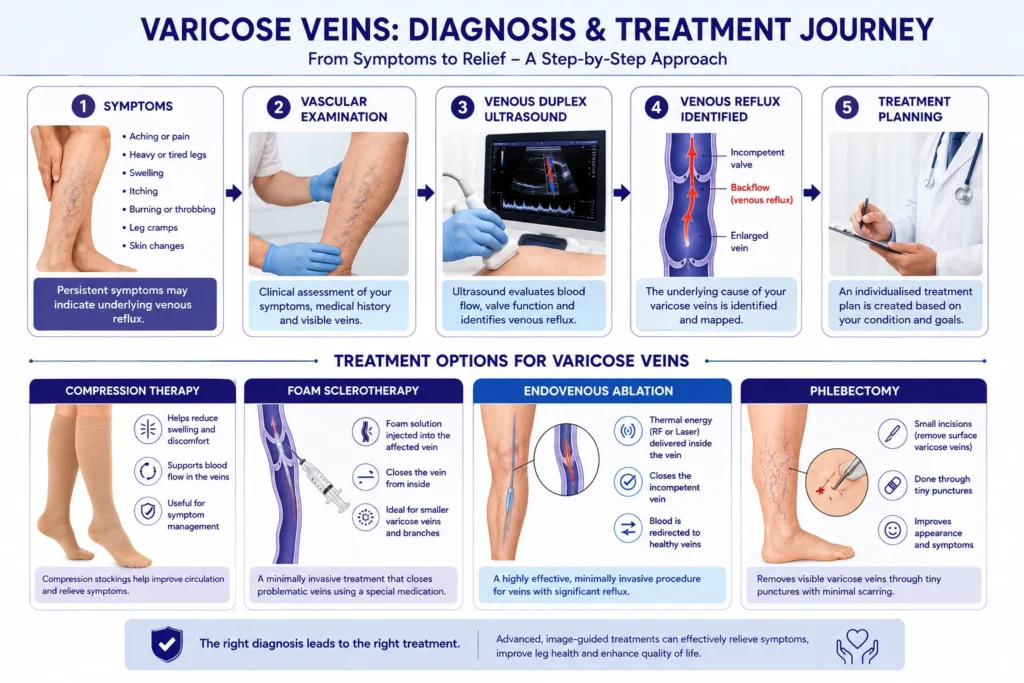
Not every varicose vein requires an intervention.
Treatment may be considered when varicose veins cause:
The decision to treat should be based on your symptoms, clinical findings, ultrasound results and individual treatment goals.
Treatment depends on the location and severity of venous reflux and the veins involved.
Compression stockings may help reduce symptoms such as swelling, heaviness and discomfort in selected patients.
They can be useful for symptom management, although they do not necessarily correct the underlying venous reflux.
Foam sclerotherapy involves injecting a specially prepared medication into a selected vein.
The treatment causes the targeted vein to close, allowing blood to move through healthier veins.
It may be appropriate for certain varicose veins and smaller veins.
Endovenous ablation is a minimally invasive treatment used to close an incompetent vein responsible for abnormal reflux.
Depending on the patient’s condition, radiofrequency ablation or laser ablation may be considered.
Phlebectomy allows selected surface varicose veins to be removed through very small skin punctures.
It may be performed alongside treatment of an underlying refluxing vein when appropriate.
Traditional vein surgery may still have a role in selected patients when minimally invasive treatment is not suitable.
The best treatment is not determined by appearance alone. A proper vascular assessment helps identify the underlying problem and guide treatment selection.
Endovenous ablation is a minimally invasive procedure designed to close an incompetent vein from inside.
Instead of removing the vein through conventional surgery, a thin catheter is introduced through a small access point.
The catheter is carefully positioned inside the affected vein under ultrasound guidance. Controlled treatment is then delivered to close the vein.
Once the problematic vein is closed, blood can be redirected through healthier functioning veins.
The body gradually deals with the treated vein over time.
Your symptoms, medical history and previous treatments are reviewed.
Ultrasound identifies the affected veins and shows where abnormal reflux is occurring.
A small catheter is introduced into the affected vein through a small access point.
The catheter is positioned precisely using ultrasound guidance.
The selected treatment is delivered to close the incompetent section of the vein.
After treatment, blood continues to return through healthy veins within the leg.
This targeted approach allows the underlying problematic vein to be treated without requiring a large surgical incision.
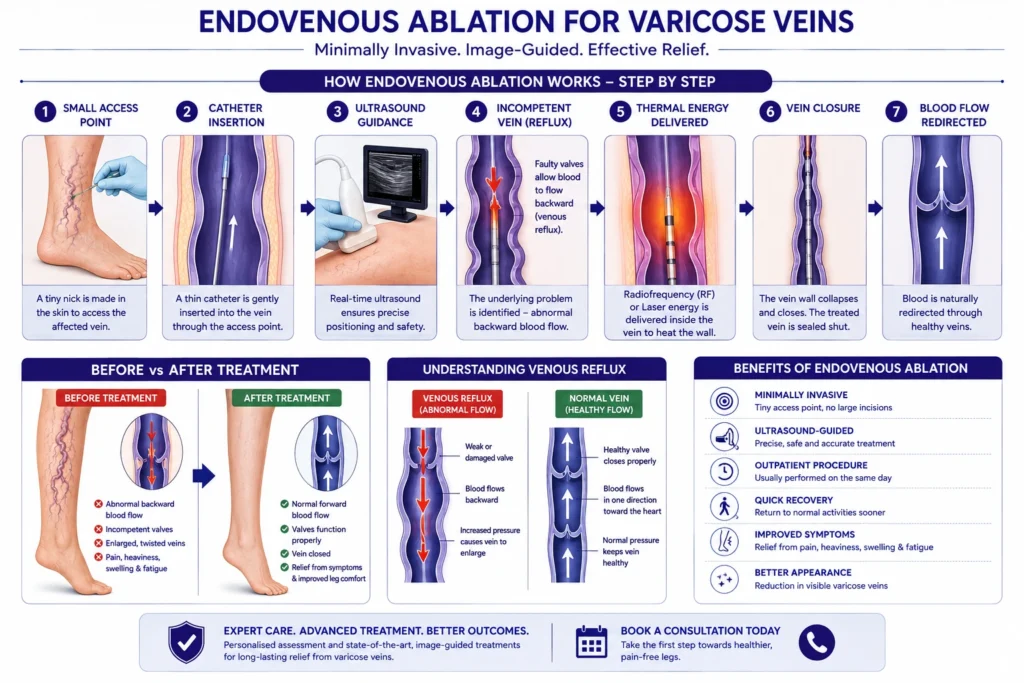
For appropriately selected patients, modern endovenous treatment can offer several advantages:
Treatment is performed through a small access point rather than a large surgical incision.
Ultrasound allows the specialist to identify and treat the affected vein precisely.
The procedure focuses on the vein responsible for abnormal blood flow.
Modern endovenous techniques avoid the larger incisions associated with traditional vein stripping.
Many minimally invasive treatments can be performed without a prolonged hospital stay.
Treating significant venous reflux may help reduce aching, heaviness and swelling in suitable patients.
Visible varicose veins may become less prominent following appropriate treatment.
Results vary between patients and depend on the severity of the venous disease and treatment selected.
Varicose veins and spider veins are not the same condition.
Varicose veins are larger, swollen and often twisted veins that may cause symptoms such as aching, heaviness or swelling.
Spider veins are much smaller, web-like blood vessels that appear close to the surface of the skin and are often primarily a cosmetic concern.
Some patients can have both conditions at the same time.
A specialist assessment can determine whether visible veins are associated with an underlying venous reflux problem.
Many varicose veins do not cause serious problems and can remain stable for years.
However, some patients may develop worsening symptoms or complications associated with chronic venous disease.
These can include:
If symptoms are getting worse or affecting your quality of life, professional assessment is recommended.
Treatment can successfully close or remove the veins responsible for the current problem, but it cannot guarantee that new varicose veins will never develop.
Venous disease can affect different veins over time.
Some patients may therefore develop new veins or require additional assessment in the future.
Follow-up and appropriate management can help monitor the condition over the long term.
Lifestyle measures may help control symptoms and support healthy circulation.
Regular walking and appropriate exercise can help the calf muscles support blood flow back toward the heart.
If your routine requires you to remain in one position for long periods, take regular movement breaks.
Raising your legs while resting may help reduce swelling and discomfort.
Managing excess weight can help reduce pressure on the veins.
Compression stockings may be recommended for selected patients depending on their symptoms and treatment plan.
These measures can help manage symptoms but may not correct significant underlying venous reflux.
Dr. AbdulRahman Alvi is a UK-trained Consultant Vascular & Interventional Radiologist with extensive experience in minimally invasive, image-guided procedures.
His qualifications include:
Varicose vein treatment begins with understanding what is causing the abnormal blood flow.
Rather than focusing only on visible veins, the assessment considers your symptoms, venous anatomy and ultrasound findings to develop an appropriate treatment plan.
Your consultation can include:
The goal is to provide the right treatment for the right patient rather than recommending the same procedure for everyone.
A specialist assessment may be appropriate if you have:
If a varicose vein starts bleeding or you develop sudden significant swelling or pain in one leg, prompt medical assessment is important.
Persistent varicose veins can affect the way you walk, work, exercise and go about your daily life.
If you are experiencing leg pain, heaviness, swelling or prominent varicose veins, a specialist assessment can help identify the underlying venous problem and determine whether minimally invasive treatment may be suitable.
Dr. AbdulRahman Alvi provides specialist vascular and Interventional Radiology assessment in Dubai, with treatment plans tailored to each patient’s condition and treatment goals.
Book an Appointment with Dr. AbdulRahman Alvi to discuss your varicose veins and treatment options.