Peripheral artery disease (PAD) affects millions of people worldwide, yet it remains one of the most underdiagnosed circulatory conditions. If you are experiencing leg pain while walking, numbness, or slow-healing wounds on your feet, understanding your options for peripheral artery disease treatment in Dubai is the first step toward better circulation and a better quality of life.
This guide covers everything you need to know about PAD treatments available in Dubai — from lifestyle changes and medications to advanced minimally invasive procedures like angioplasty.
What Is Peripheral Artery Disease?
Peripheral artery disease occurs when narrowed arteries reduce blood flow to your limbs, most commonly the legs. The narrowing is usually caused by atherosclerosis — a buildup of fatty deposits (plaque) on artery walls.
PAD often develops gradually and many people have no symptoms in the early stages. As the condition progresses, reduced blood flow can cause pain, mobility problems, and in severe cases, tissue damage that may lead to amputation if left untreated. People with PAD also face a higher risk of heart attack and stroke, because atherosclerosis rarely affects just one part of the body.
Risk factors include smoking, diabetes, high blood pressure, high cholesterol, obesity, increasing age, and a family history of vascular disease.
Symptoms of PAD: When to See a Doctor
See a vascular specialist if you notice any of the following:
- Claudication — cramping, aching, or fatigue in the legs, calves, or thighs during walking or exercise, which eases with rest
- Leg numbness or weakness
- Coldness in one leg or foot compared to the other
- Sores on the legs or feet that heal slowly or not at all
- A change in skin colour on the legs
- Slower hair or toenail growth on the affected leg
- Pain in the feet at rest, especially at night (a sign of advanced disease)
These symptoms warrant prompt evaluation. Early diagnosis gives you access to the widest range of PAD treatment options.
How PAD Is Diagnosed
Diagnosis usually starts with a physical examination and a review of your symptoms and risk factors. Common diagnostic tests include:
- Ankle-brachial index (ABI): a simple, painless comparison of blood pressure in the ankle and the arm
- Duplex ultrasound: imaging that shows blood flow and pinpoints narrowed areas
- CT or MR angiography: detailed images of the arteries
- Catheter angiography: a minimally invasive X-ray procedure that maps blockages precisely and can be combined with treatment in the same session
PAD Treatments in Dubai: Your Options
Treatment depends on the severity of the disease, the location of blockages, and your overall health. Most treatment plans combine several approaches.
1. Lifestyle Changes
The foundation of every PAD treatment plan:
- Quit smoking — the single most important step; smoking dramatically accelerates artery narrowing
- Heart-healthy diet — low in saturated fat and salt
- Weight management and diabetes control
- Foot care — daily inspection, since reduced circulation makes injuries dangerous
2. Supervised Exercise Therapy
Structured walking programmes are one of the most effective treatments for claudication. Walking until moderate pain develops, resting, then walking again — repeated over weeks — can significantly increase pain-free walking distance. Many patients see meaningful improvement within three months.
3. Medications
Your doctor may prescribe:
- Antiplatelet medicines (such as aspirin or clopidogrel) to prevent blood clots
- Statins to lower cholesterol and stabilise plaque
- Cilostazol to improve walking distance in claudication
- Medicines to control blood pressure and blood sugar
Medications manage the disease and reduce cardiovascular risk, but they cannot physically reopen a severely blocked artery.
4. Peripheral Angioplasty and Stenting (Minimally Invasive)
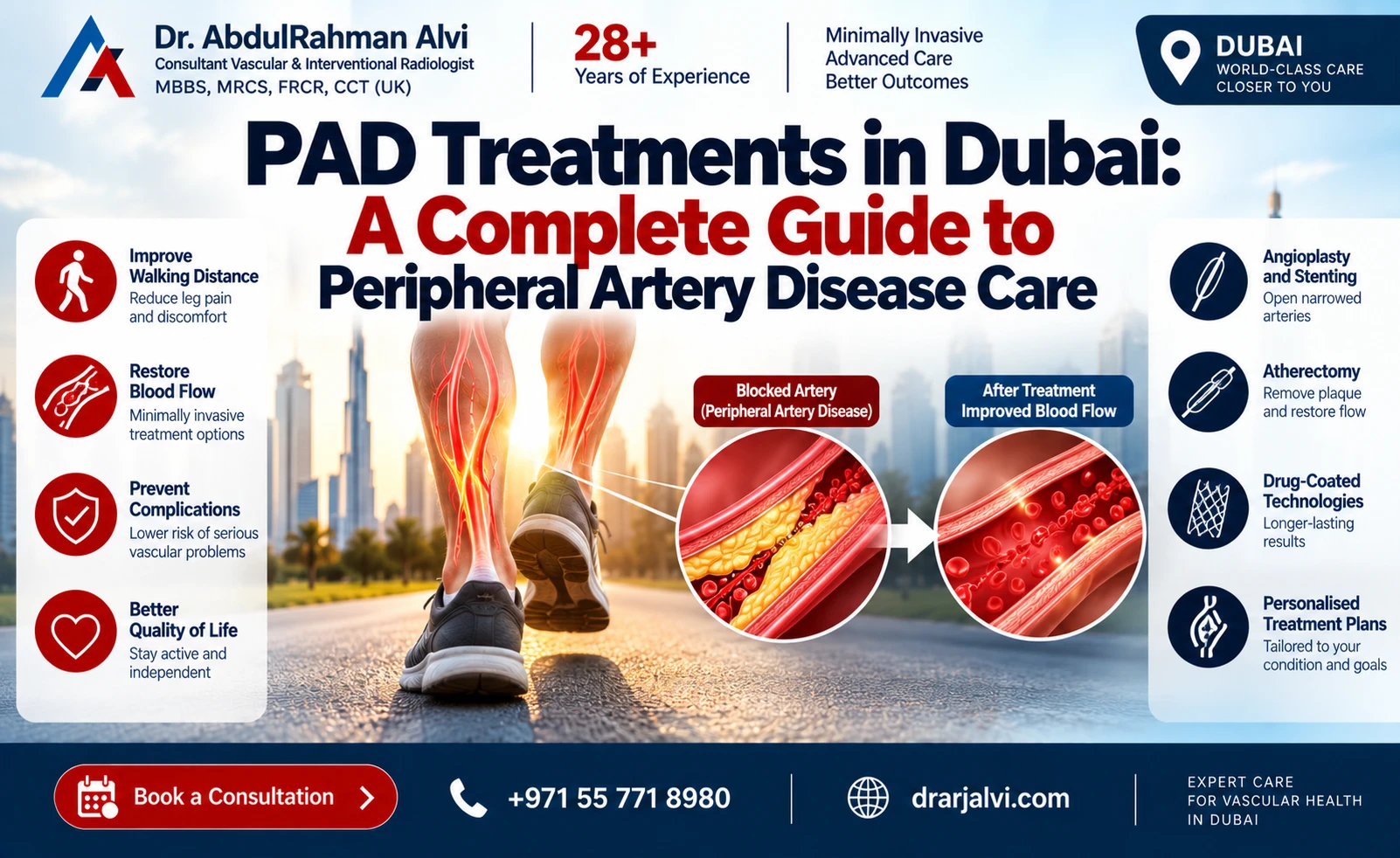
When blockages significantly limit blood flow, peripheral angioplasty is often the preferred treatment. A thin catheter with a small balloon is guided to the narrowed artery and inflated to widen it; a stent (a tiny mesh tube) may be placed to keep the artery open.
Angioplasty is performed through a tiny puncture — usually in the groin — under local anaesthesia. Most patients go home the same day, recovery is measured in days rather than weeks, and there is no large surgical wound. For many patients in Dubai, this day-care approach is the main reason to choose an interventional radiology clinic over open surgery.
5. Atherectomy
In some cases, a device is used to physically remove plaque from the artery wall. Atherectomy is often combined with angioplasty, particularly for hardened or calcified blockages.
6. Bypass Surgery
For very long blockages or when minimally invasive options are not suitable, a surgeon may create a bypass around the blocked artery using a graft. Bypass is effective but involves general anaesthesia, a hospital stay, and longer recovery.
PAD Treatment in Dubai: What to Expect
Dubai offers the full spectrum of PAD care, from diagnosis to advanced intervention. At a specialist interventional radiology practice, the typical journey looks like this:
- Consultation and evaluation — symptoms, risk factors, and circulation tests
- Imaging — ultrasound or angiography to map the blockages
- Personalised plan — the least invasive effective option first
- Day-care procedure (for angioplasty) — usually under two hours
- Follow-up — walking programme, medications, and surveillance imaging
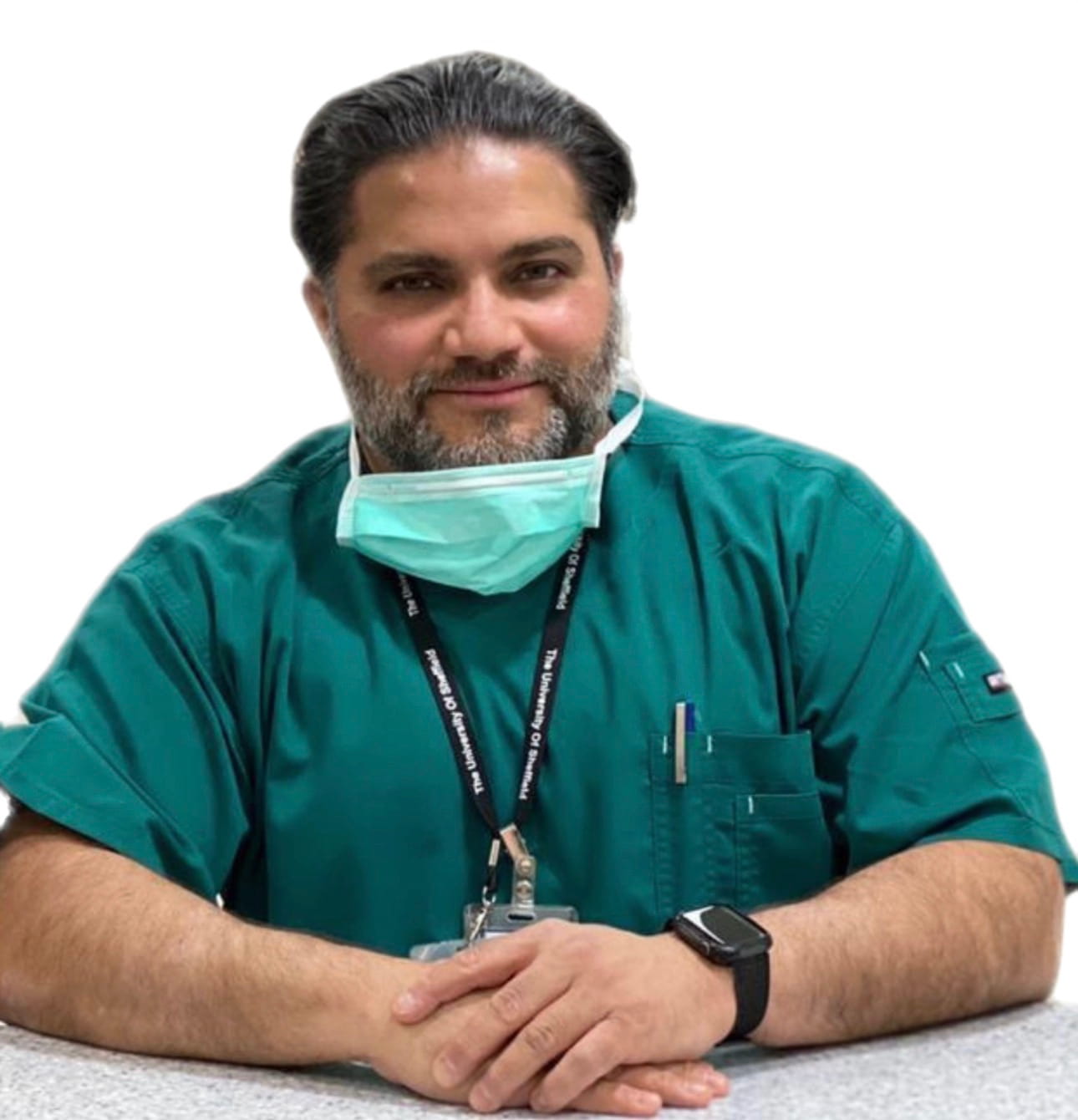
Dr Abdul Rahman Alvi is a consultant vascular and interventional radiologist in Dubai specialising in minimally invasive artery treatments, including peripheral angioplasty for PAD.
How Much Does PAD Treatment Cost in Dubai?
Costs vary widely depending on the severity of disease, the number of blockages, the type of procedure, and the hospital or clinic. A consultation and diagnostic workup cost far less than an intervention, and minimally invasive day-care procedures generally cost less than open bypass surgery with its hospital stay. The most reliable way to get an accurate figure is a personalised evaluation — book a consultation to discuss your case.
Frequently Asked Questions
Take the Next Step
Leg pain is not just a sign of ageing — it is often treatable circulatory disease. If you have symptoms of PAD, early evaluation opens up simpler, less invasive treatment options. Contact the clinic to book an assessment.
Medical disclaimer: This article is for information only and is not a substitute for professional medical advice, diagnosis, or treatment. Always seek the advice of your doctor with any questions about a medical condition.