If pain, cramping or heaviness starts in your legs when you walk and improves after you rest, it may not simply be an age-related problem.
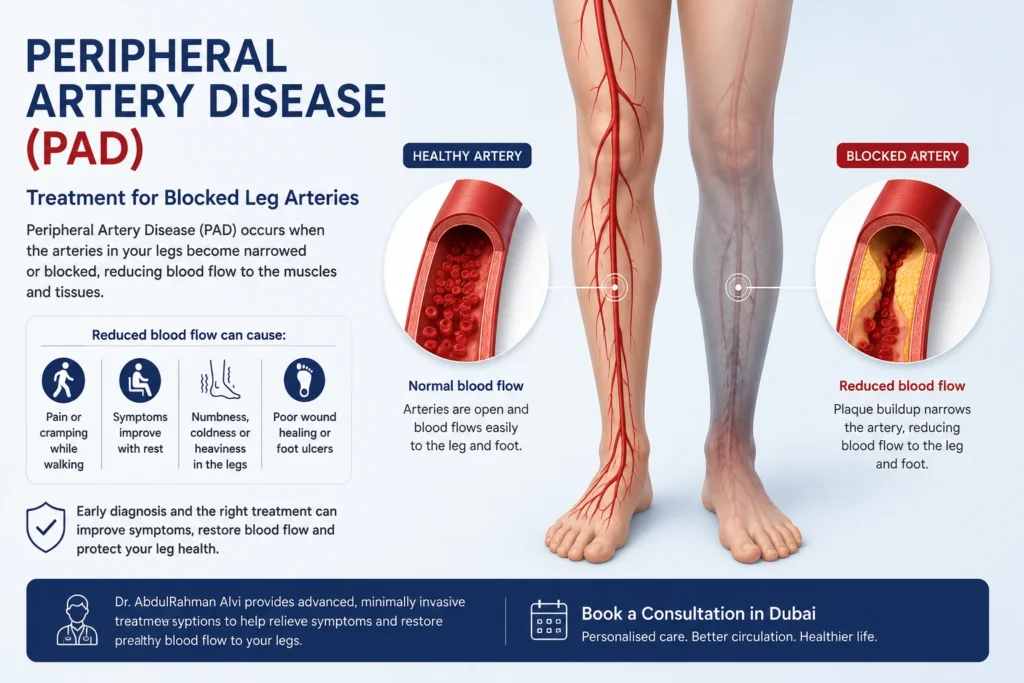
These symptoms can be a sign of Peripheral Artery Disease (PAD), a condition in which narrowed or blocked arteries reduce blood flow to the legs.
For some people, PAD causes discomfort only after walking a certain distance. For others, reduced circulation can eventually affect everyday activities, wound healing and the health of the foot or limb.
The right treatment depends on the severity of the disease, where the artery is narrowed or blocked, your symptoms and your overall health. Treatment may range from lifestyle changes, exercise and medication to minimally invasive procedures that restore blood flow.
Dr. AbdulRahman Alvi provides specialist assessment and image-guided treatment for Peripheral Artery Disease in Dubai, including endovascular procedures such as angioplasty and stenting when clinically appropriate.
Peripheral Artery Disease treatment depends on the severity of arterial narrowing and the patient’s symptoms. Mild or moderate disease may be managed with exercise, lifestyle changes and medication, while selected patients with significant symptoms or severe loss of blood flow may benefit from revascularization such as angioplasty or stenting.
Peripheral Artery Disease is a circulation problem caused by narrowing or blockage of arteries outside the heart and brain. It most commonly affects the arteries supplying the legs.
The usual underlying cause is atherosclerosis, where plaque builds up inside the artery wall. As the artery becomes narrower, less oxygen-rich blood reaches the muscles and tissues below the affected area.
At first, you may only notice symptoms when walking or exercising because your muscles need more blood during activity. As arterial disease becomes more advanced, symptoms can occur with less activity or even at rest.
PAD can also be a sign of a wider vascular problem. It is associated with an increased risk of cardiovascular events, which is why diagnosis should be followed by appropriate long-term management rather than focusing only on the affected leg.
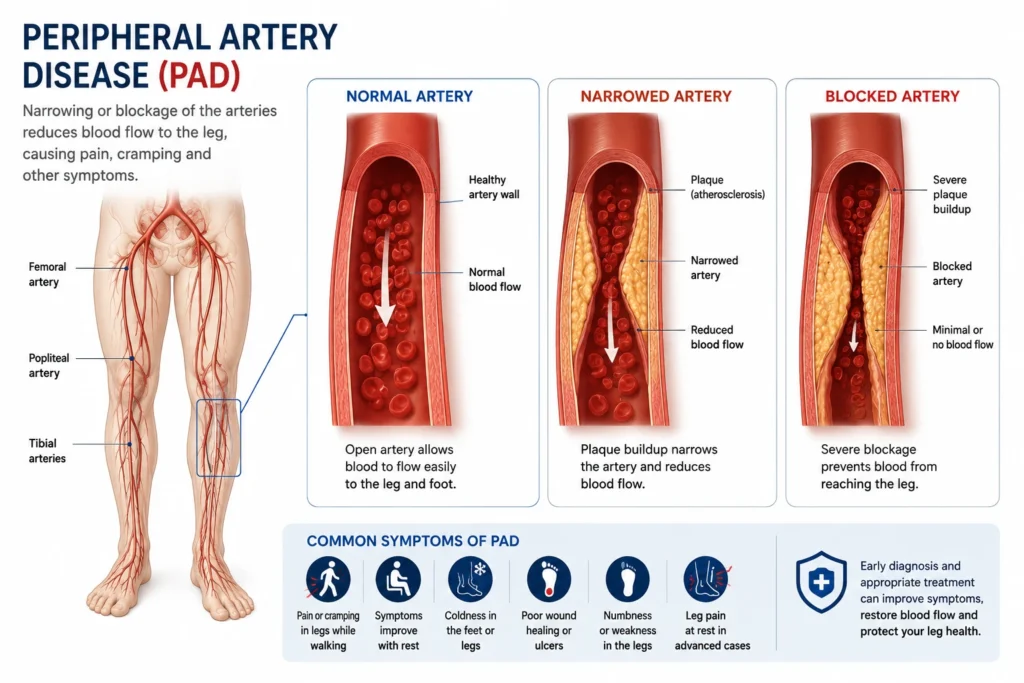
PAD can develop gradually, and some people have no obvious symptoms.
When symptoms do occur, the most characteristic pattern is leg discomfort during activity that improves with rest.
You may experience:
Some people mistake PAD symptoms for arthritis, sciatica, muscle problems or simply getting older. Repeated pain that follows a consistent pattern with walking deserves proper assessment.
Consider a vascular assessment if leg discomfort is repeatedly limiting your walking or daily activities.
You should also seek specialist advice if you have:
The earlier the cause is identified, the clearer your treatment options become.
PAD is most commonly caused by atherosclerosis, but several factors can increase the risk of developing arterial disease.
Smoking is one of the most important modifiable risk factors for PAD and contributes to progression of vascular disease.
Diabetes increases the risk of PAD and can make problems involving the feet and wound healing more difficult to manage.
Excess cholesterol contributes to plaque formation within the arteries.
Long-term hypertension can damage blood vessels and contribute to atherosclerotic disease.
The likelihood of PAD increases with age, particularly when other cardiovascular risk factors are present.
A family history of vascular or cardiovascular disease can also increase risk.
A PAD assessment begins with your symptoms, medical history and physical examination.
Your doctor may check the pulses in your legs and feet and look for differences in temperature, skin colour or signs of poor wound healing.
The Ankle-Brachial Index (ABI) compares blood pressure at the ankle with blood pressure in the arm. It is a simple, non-invasive test that can help identify reduced arterial blood flow. The ABI is an important part of PAD assessment.
Doppler ultrasound can evaluate blood flow through the arteries and help identify areas of narrowing or blockage.
CT angiography can provide detailed images of the arterial system and help map the location and extent of disease.
In selected patients, MR angiography may be used to provide detailed vascular imaging.
When an endovascular procedure is being considered, catheter angiography can provide detailed information about the affected arteries and help guide treatment.
The choice of investigation depends on your symptoms, clinical findings and treatment requirements.
There is no single treatment that is right for every person with PAD.
The goal is to improve symptoms, protect the limb when circulation is severely reduced and reduce the risk of future cardiovascular complications.
Treatment may include:
Stopping smoking, maintaining a healthy weight, following an appropriate diet and managing conditions such as diabetes, high blood pressure and high cholesterol are important parts of PAD care.
A structured exercise programme can improve walking ability and functional capacity in appropriate patients. Exercise is an important component of modern PAD management.
Depending on your individual health, medication may be recommended to manage cholesterol, blood pressure, diabetes and the risk of blood clots.
When symptoms remain limiting despite appropriate medical management and exercise, or when there is severe impairment of blood flow, revascularization may be considered.
This can include angioplasty, stenting or other catheter-based techniques depending on the arterial anatomy and clinical situation.
Some patients with extensive or complex arterial disease may benefit from bypass surgery. The decision between endovascular treatment and surgery depends on the individual patient’s anatomy, symptoms and overall clinical condition.
Peripheral angioplasty is a minimally invasive procedure used to improve blood flow through a narrowed or blocked artery.
Rather than making a large surgical incision, an Interventional Radiologist introduces a thin catheter through a blood vessel and guides it towards the affected artery using real-time imaging.
A small balloon is positioned across the narrowed section and inflated to widen the vessel.
In selected cases, a stent may be placed to help maintain the opening of the artery.
Angioplasty is less invasive than bypass surgery and can provide an appropriate revascularization option for selected patients.
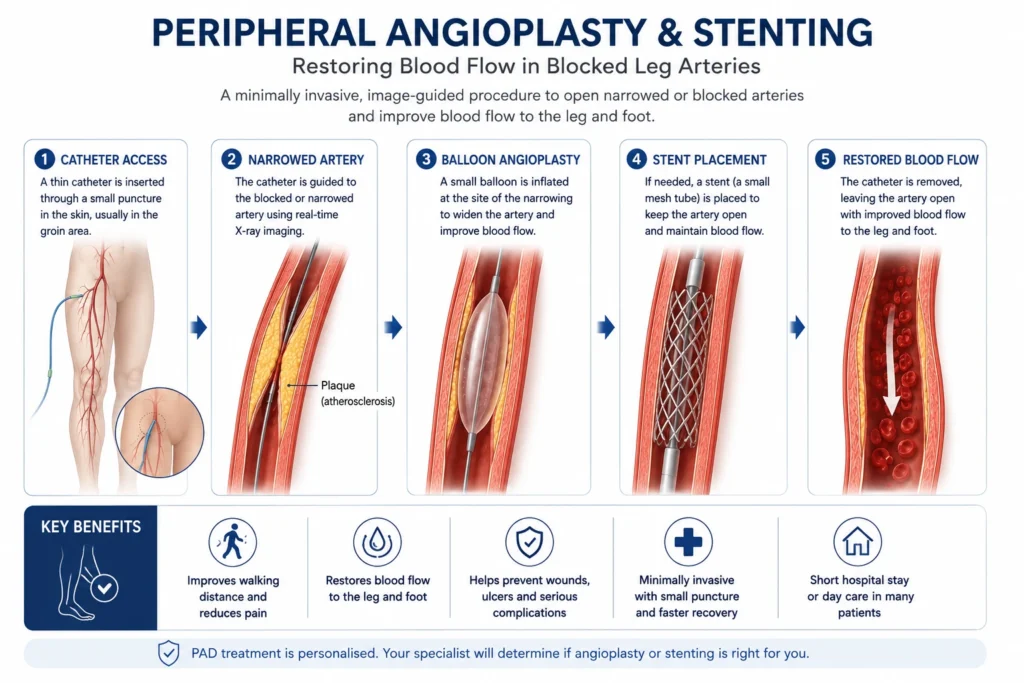
A stent is a small mesh-like tube placed inside an artery to help keep it open.
A stent may be considered when additional support is required after angioplasty or when the characteristics of the arterial narrowing make stenting appropriate.
The decision depends on factors such as:
Not every patient undergoing angioplasty requires a stent.
Your symptoms, medical history and vascular imaging are reviewed to understand the location and severity of the arterial disease.
A small catheter is introduced through a blood vessel using a carefully selected access point.
The catheter is guided through the vascular system under real-time imaging until it reaches the narrowed or blocked artery.
A small balloon is positioned across the narrowing and inflated to improve the internal diameter of the artery.
If additional support is needed, a stent may be deployed to help maintain blood flow through the treated section.
The catheter is removed and the access site is monitored. Depending on the procedure and your individual condition, you may be able to return home after a period of observation.
An endovascular procedure is not automatically required simply because PAD has been diagnosed.
It may be considered for appropriately selected patients with:
Current PAD guidance supports revascularization to prevent limb loss in patients with chronic limb-threatening ischemia and, in selected patients with claudication that remains functionally limiting despite appropriate medical therapy and structured exercise, to improve quality of life and walking ability.
Chronic limb-threatening ischemia is an advanced form of PAD in which blood supply to the leg or foot is severely reduced.
Warning signs can include:
This is a serious condition that requires prompt specialist assessment.
If you develop sudden severe leg pain, a cold or pale limb, sudden numbness or a rapid change in circulation, seek emergency medical attention immediately.
One of the advantages of an endovascular approach is that it avoids the large incision associated with open bypass surgery.
Recovery varies according to:
Peripheral angioplasty is commonly performed under local anaesthesia and may be carried out as a day procedure in suitable patients.
After treatment, you will receive individual instructions regarding walking, exercise, medication, catheter-site care and follow-up.
Long-term management remains important because treating a specific arterial blockage does not remove the underlying causes of atherosclerosis.
When vascular treatment involves complex arterial anatomy, specialist experience and careful treatment planning matter.
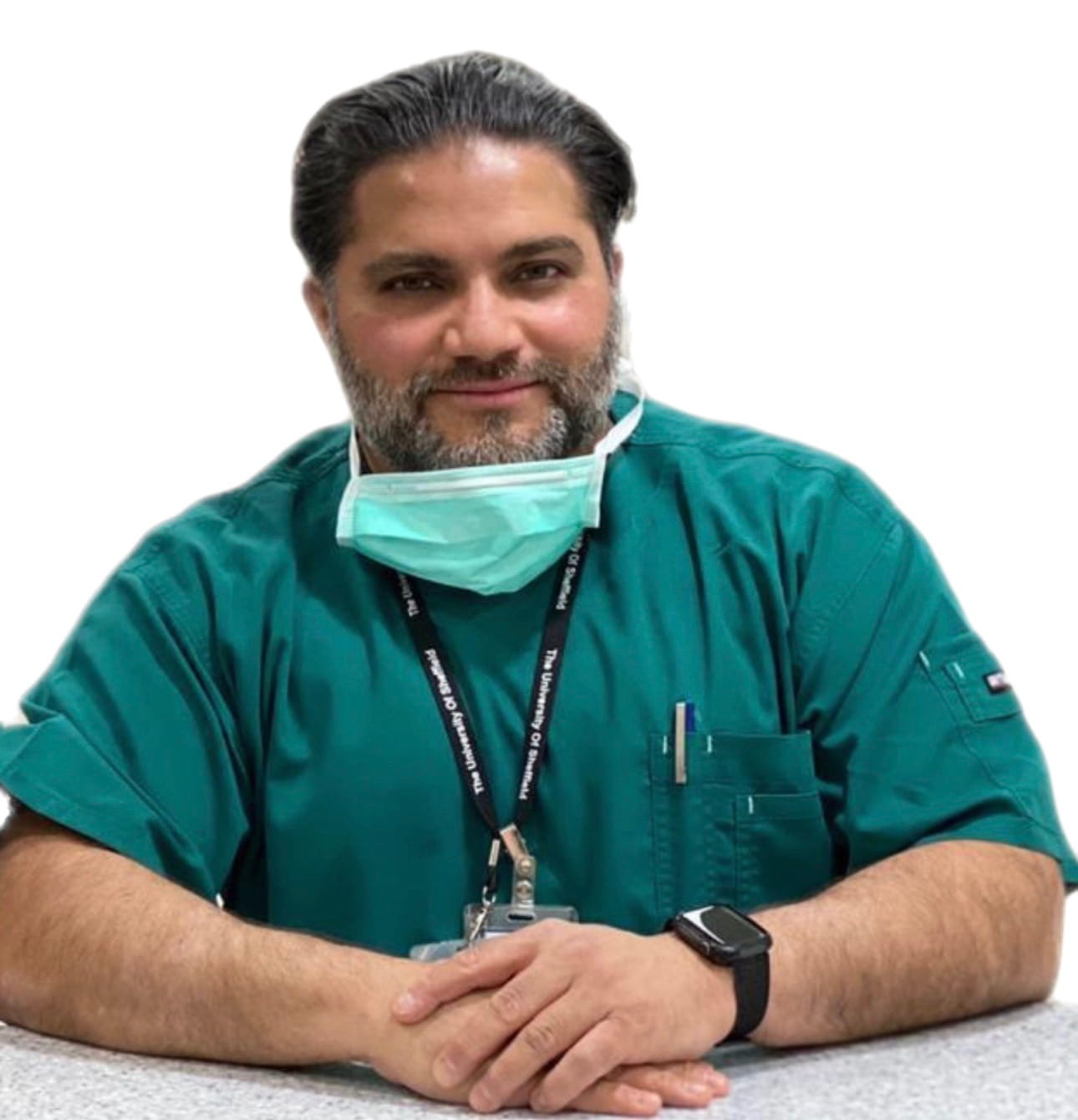
Dr. AbdulRahman Alvi is a UK-trained Consultant Vascular & Interventional Radiologist in Dubai with MBBS, MRCS, FRCR and CCT (UK) qualifications, Dual CCT in Interventional & Clinical Radiology, and more than 28 years of clinical experience.
His specialist training in interventional radiology allows vascular conditions to be assessed and treated using minimally invasive, image-guided techniques.
PAD treatment should not be based solely on an imaging report.
A proper assessment considers:
If an intervention is appropriate, the aim is to select the most suitable approach rather than automatically recommending a procedure.
For patients seeking Peripheral Artery Disease treatment in Dubai, this patient-specific approach helps ensure that treatment decisions are made with a clear understanding of both the potential benefits and limitations.
If leg pain is limiting your walking, your feet feel unusually cold, or a wound is taking too long to heal, don’t assume that the problem is simply ageing or muscle weakness.
Peripheral Artery Disease can be assessed, managed and, when appropriate, treated with minimally invasive vascular procedures.
Dr. AbdulRahman Alvi provides specialist Peripheral Artery Disease treatment in Dubai, including image-guided endovascular procedures such as peripheral angioplasty and stenting for appropriately selected patients.
During your consultation, your symptoms, medical history and vascular investigations will be reviewed to determine: