Tennis elbow is a common condition that causes pain and tenderness around the outer side of the elbow. Despite its name, it does not only affect tennis players. Repetitive gripping, lifting, wrist movements, manual work and other activities that repeatedly load the forearm tendons can contribute to the condition.
For many patients, tennis elbow improves with appropriate activity modification, physiotherapy, stretching and strengthening. However, some people continue to experience significant pain and reduced arm function despite months of conservative treatment.
For carefully selected patients with chronic, treatment-resistant tennis elbow, minimally invasive transarterial embolization may be considered as an advanced treatment option. This is an emerging approach and is not considered a first-line treatment.
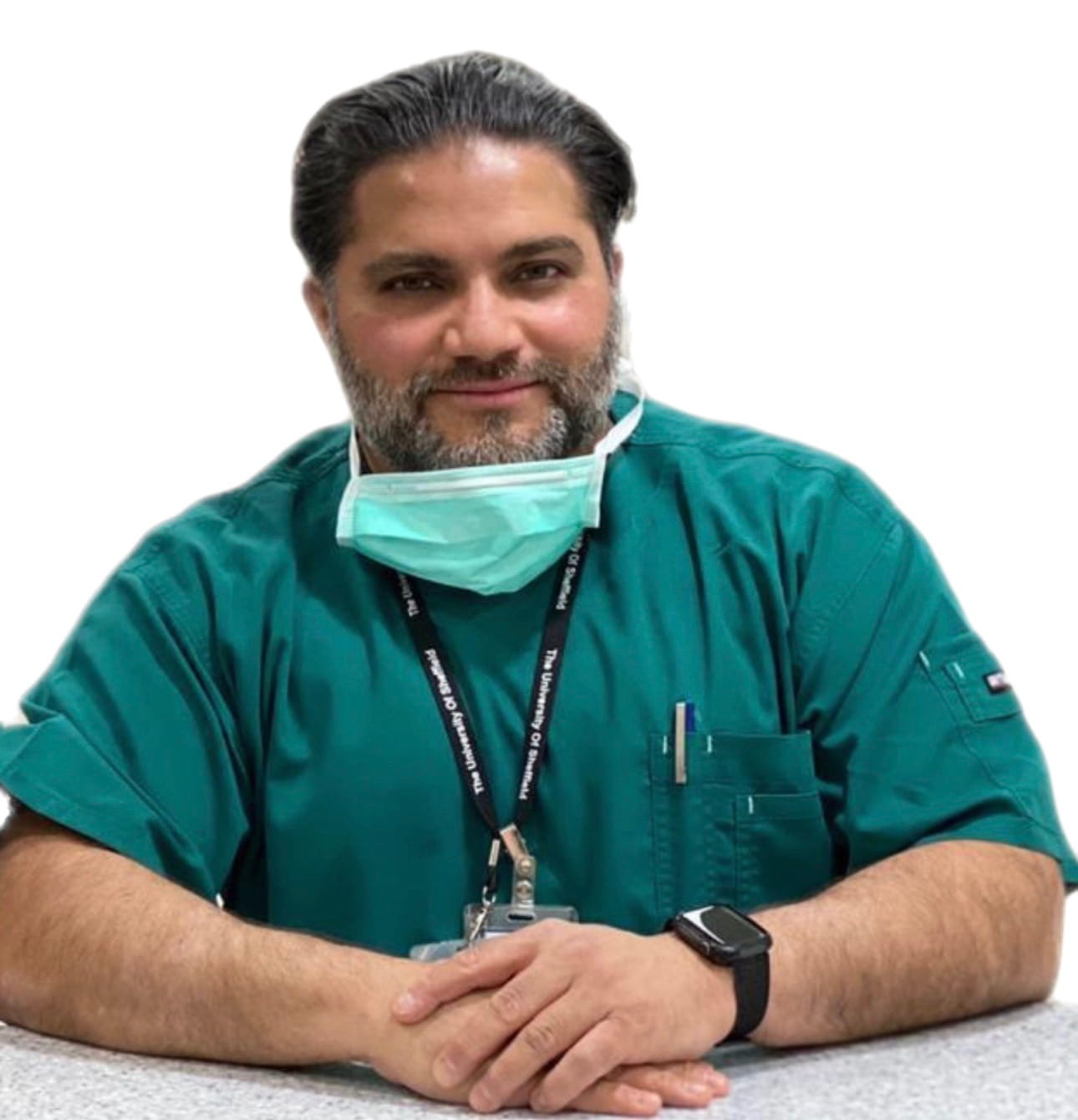
Dr. AbdulRahman Alvi, Consultant Vascular & Interventional Radiologist, provides specialist assessment in Dubai for patients with persistent elbow pain who may be exploring minimally invasive treatment options.
Tennis elbow can gradually become frustrating when simple movements begin causing pain.
You may experience:
If your elbow pain has continued for several months or is affecting work, exercise or everyday activities, a specialist assessment can help determine the cause and appropriate treatment options.
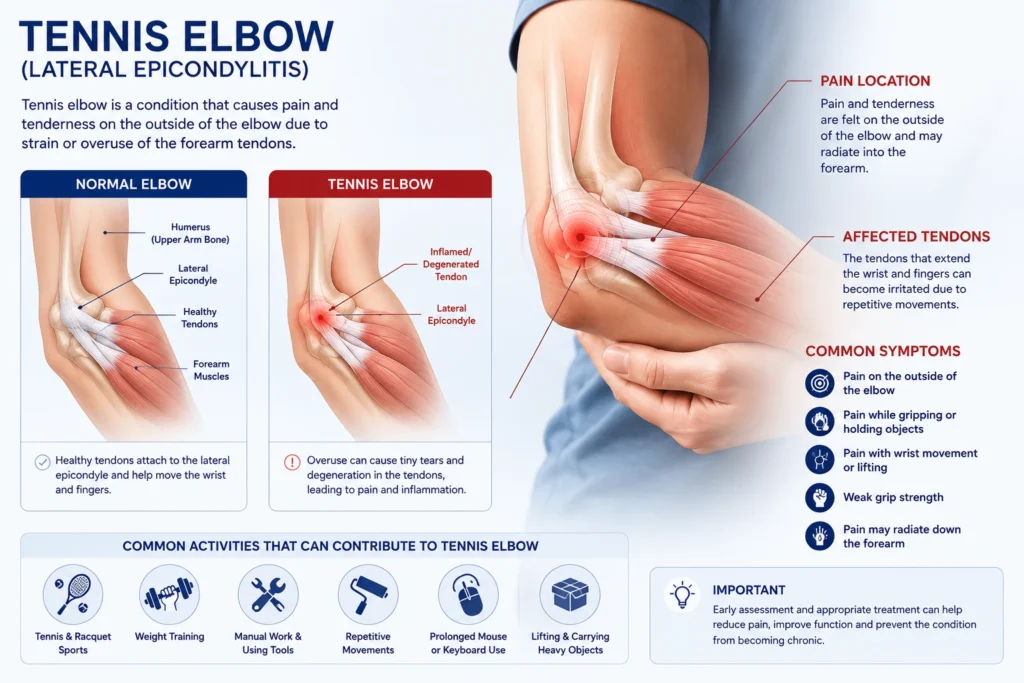
Tennis elbow, also known as lateral epicondylitis or lateral elbow tendinopathy, affects the tendons that connect the forearm muscles to the outer part of the elbow.
These tendons are involved in movements such as extending the wrist and fingers and gripping objects.
Repeated or excessive loading can cause changes within the tendon and lead to pain around the outer elbow. Despite its name, tennis elbow can develop in people who have never played tennis.
The condition is commonly associated with repetitive activities involving gripping, lifting, twisting or repeated wrist movements.
Symptoms can vary depending on the severity and duration of the condition.
The most common symptom is pain around the bony prominence on the outer side of the elbow.
Holding a cup, carrying a bag, using tools or gripping an object may increase the pain.
Movements involving the wrist or forearm can aggravate symptoms.
Lifting everyday objects can become uncomfortable, particularly when the forearm is under load.
The area around the outer elbow may feel particularly sensitive when touched.
Pain can sometimes extend from the elbow down into the forearm.
Persistent pain can make gripping objects more difficult and may reduce your ability to use the affected arm normally.
Tennis elbow generally develops when the forearm tendons are repeatedly exposed to loads that exceed their ability to tolerate them.
Common contributing factors include:
Repeated gripping can place significant stress on the muscles and tendons around the outer elbow.
Activities involving repeated wrist movements may contribute to tendon overload.
Jobs involving tools, lifting, carrying or repetitive arm movements can increase the risk.
Tennis, badminton and other racquet sports can place repeated stress on the forearm tendons.
Certain lifting exercises may overload the wrist and forearm tendons, particularly when training volume increases suddenly.
Extended mouse or keyboard use may aggravate symptoms in some people, particularly when combined with other repetitive activities.
Increasing the intensity or frequency of an activity too quickly can place additional stress on the tendon.
Not every patient has the same underlying cause, which is why understanding your daily activities and symptoms is important when planning treatment.
Tennis elbow is usually diagnosed through your symptoms and a clinical examination.
Your assessment may consider:
Specific clinical movement and strength tests can help support the diagnosis.
Ultrasound may be useful when additional assessment of the tendon is required or when another condition needs to be considered.
MRI may be considered when the diagnosis is uncertain, symptoms are persistent or another structural problem needs to be investigated.
Imaging is not automatically required for every patient. The appropriate investigation depends on the clinical findings and individual circumstances.
Not every pain around the outer elbow is tennis elbow.
Other possible causes include:
A proper assessment is therefore important before considering an invasive procedure.
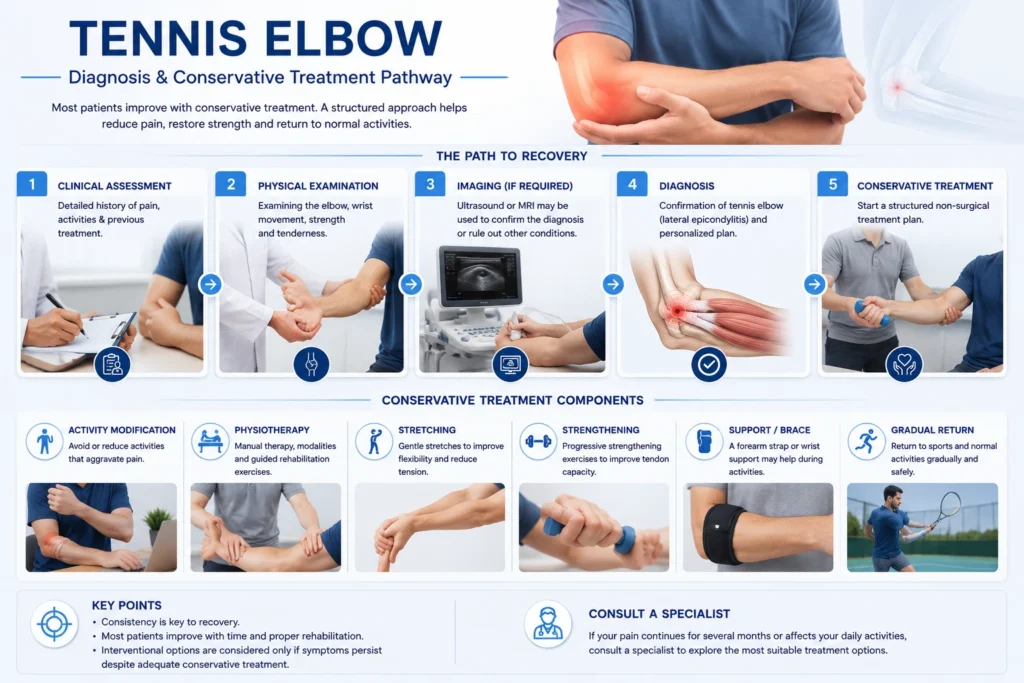
Most patients should initially receive conservative treatment.
A structured rehabilitation programme can help the tendon gradually adapt to load and improve strength and function.
Treatment may include:
Temporarily reducing activities that significantly aggravate your symptoms can help reduce excessive tendon loading.
This does not necessarily mean completely stopping all movement. The goal is usually to modify painful activities while maintaining appropriate movement.
A physiotherapist can develop an individual rehabilitation programme based on your symptoms, strength and activity requirements.
Gentle stretching can help maintain flexibility around the wrist and forearm.
Progressive strengthening exercises can improve the ability of the tendon and surrounding muscles to tolerate load.
As symptoms improve, activities should generally be reintroduced progressively rather than returning immediately to the previous level of loading.
A forearm strap or wrist support may help some patients manage symptoms during activities.
Appropriate pain-relief options may be considered depending on your health and individual circumstances.
Tennis elbow can improve gradually over weeks or months, and many patients recover without invasive treatment.
However, further assessment may be appropriate when:
Before considering an interventional procedure, it is important to confirm the diagnosis and ensure appropriate conservative treatment has been attempted.
Transarterial embolization (TAE) is an emerging minimally invasive treatment approach being investigated for selected patients with chronic tennis elbow that has not responded adequately to conservative treatment.
Research into lateral elbow tendinopathy has identified abnormal small blood vessels, or neovascularity, around areas of chronic tendon disease.
During embolization, an Interventional Radiologist uses vascular imaging to identify abnormal vessels associated with the painful area and selectively delivers embolic material to those vessels.
The objective is to reduce abnormal vascularity while preserving the normal circulation of the arm and hand.
The procedure does not involve surgically removing the tendon.
Embolization is not a first-line treatment and should not be presented as a guaranteed cure. It is an emerging option for carefully selected patients with persistent symptoms despite appropriate conservative treatment.
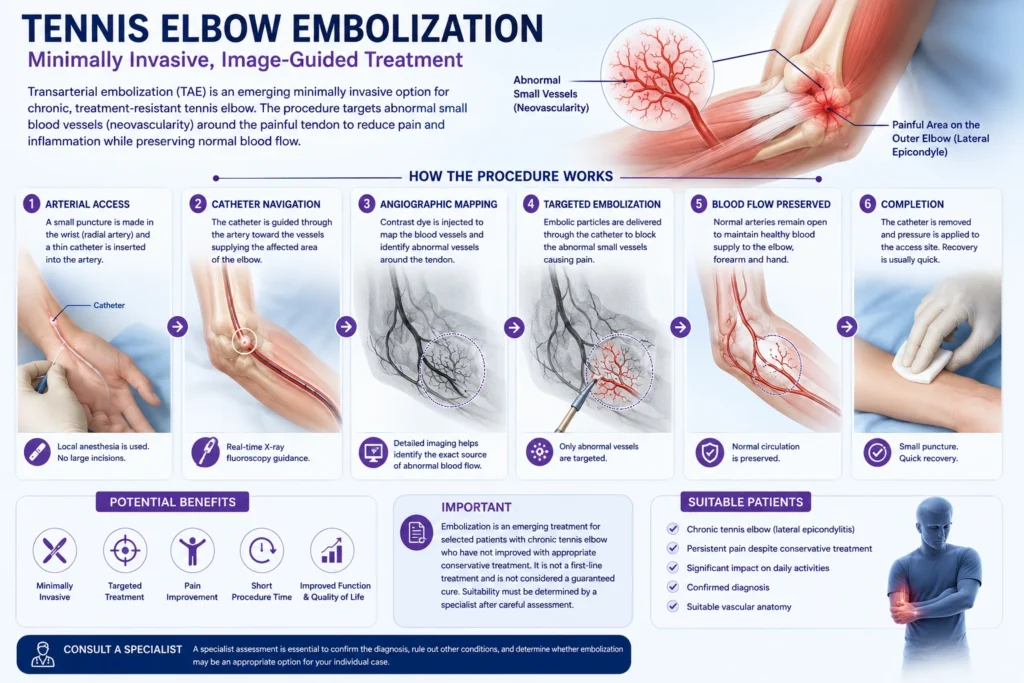
When the procedure is considered appropriate, it is performed using image guidance.
Your symptoms, previous treatments and clinical findings are reviewed to confirm that chronic tennis elbow is the likely cause of your pain.
The blood vessels around the affected elbow are evaluated to identify abnormal vascularity.
A small vascular access point is used to introduce a catheter.
Contrast imaging helps identify abnormal vessels supplying the symptomatic region.
Small embolic material is selectively delivered to the abnormal vessels.
The catheter is removed and the access site is monitored.
The objective is to target abnormal vessels associated with the painful tendon while preserving normal arterial blood flow to the arm and hand.
Embolization is not suitable for everyone with tennis elbow.
It may be considered for carefully selected patients who have:
A specialist assessment is essential before deciding whether embolization is appropriate.
Research into arterial embolization for tennis elbow has produced encouraging findings.
Studies involving patients with chronic lateral elbow tendinopathy that had not responded to conservative treatment have reported improvements in pain, function and grip strength following embolization.
However, much of the available evidence comes from relatively small studies, and further research is needed to establish the long-term effectiveness of the procedure and its position alongside other treatments.
For this reason, tennis elbow embolization should be considered an advanced option for selected treatment-resistant cases, rather than the standard first-line treatment.
For appropriately selected patients, a catheter-based approach may offer potential advantages.
The procedure is performed through a small vascular access point rather than open elbow surgery.
Image guidance allows the specialist to identify and selectively treat abnormal vessels around the affected region.
The procedure does not require surgical removal of the affected tendon.
Studies have reported improvements in pain and function in selected patients.
Embolization may provide another treatment option for patients who continue to experience significant symptoms despite appropriate conservative management.
The potential benefits should always be balanced against the current evidence and individual procedural risks.
As with any vascular procedure, embolization carries potential risks.
Possible complications may include:
Your individual risks and expected benefits should be discussed during consultation before treatment.
Recovery varies depending on the individual patient, treatment technique and vascular access site.
After the procedure, you may receive specific guidance regarding:
Improvement does not necessarily occur immediately in every patient.
Even when an interventional treatment is performed, rehabilitation and gradual return to normal activity remain important.
Yes.
Most patients should initially receive non-operative treatment.
Activity modification, physiotherapy, stretching, strengthening and gradual tendon loading form the foundation of tennis elbow management. Many patients improve over time without invasive treatment.
Interventional treatment is generally considered only when symptoms remain persistent and significantly affect quality of life despite appropriate conservative management.
| Treatment | Conservative Management | Embolization |
|---|---|---|
| First-line approach | Yes | No |
| Activity modification | Important | Usually attempted beforehand |
| Physiotherapy | Core treatment | Usually attempted beforehand |
| Stretching & strengthening | Important | Still relevant |
| Open surgery required | No | No |
| Catheter procedure | No | Yes |
| Suitable for every patient | No | No |
| Evidence base | Established | Emerging |
| Best suited to | Most patients initially | Selected refractory cases |
The goal is not to replace rehabilitation.
For most patients, conservative management remains the starting point. Embolization may be considered when symptoms remain significant despite appropriate treatment and the patient is clinically suitable.
Dr. AbdulRahman Alvi is a UK-trained Consultant Vascular & Interventional Radiologist with:
Interventional Radiology focuses on minimally invasive, image-guided procedures performed through small access points.
For persistent tennis elbow, the priority is to establish the correct diagnosis and determine whether an interventional treatment is genuinely appropriate.
Your assessment can consider:
This individualised approach helps avoid unnecessary procedures and ensures that treatment decisions are based on your specific condition.
Consider specialist assessment if:
Elbow pain following significant trauma, or pain associated with marked swelling, redness, fever, numbness or weakness, may require prompt medical assessment because other conditions can cause similar symptoms.
Persistent elbow pain can affect your grip, work, exercise and everyday activities.
If you have chronic tennis elbow that has not improved despite appropriate treatment, a specialist assessment can help determine why your symptoms are continuing and whether advanced treatment options should be considered.
Dr. AbdulRahman Alvi provides specialist Vascular & Interventional Radiology assessment in Dubai for patients exploring minimally invasive options for persistent tennis elbow.
Your consultation can help determine:
Book a consultation with Dr. AbdulRahman Alvi in Dubai to discuss your persistent elbow pain and treatment options.