If you’re constantly searching for the nearest restroom, waking up several times every night to urinate, or struggling with a weak urine stream, you may be suffering from an enlarged prostate, also known as Benign Prostatic Hyperplasia (BPH).
These symptoms are common in men over 50, but they are not something you simply have to live with. Left untreated, BPH can interfere with your sleep, work, travel, and overall quality of life.
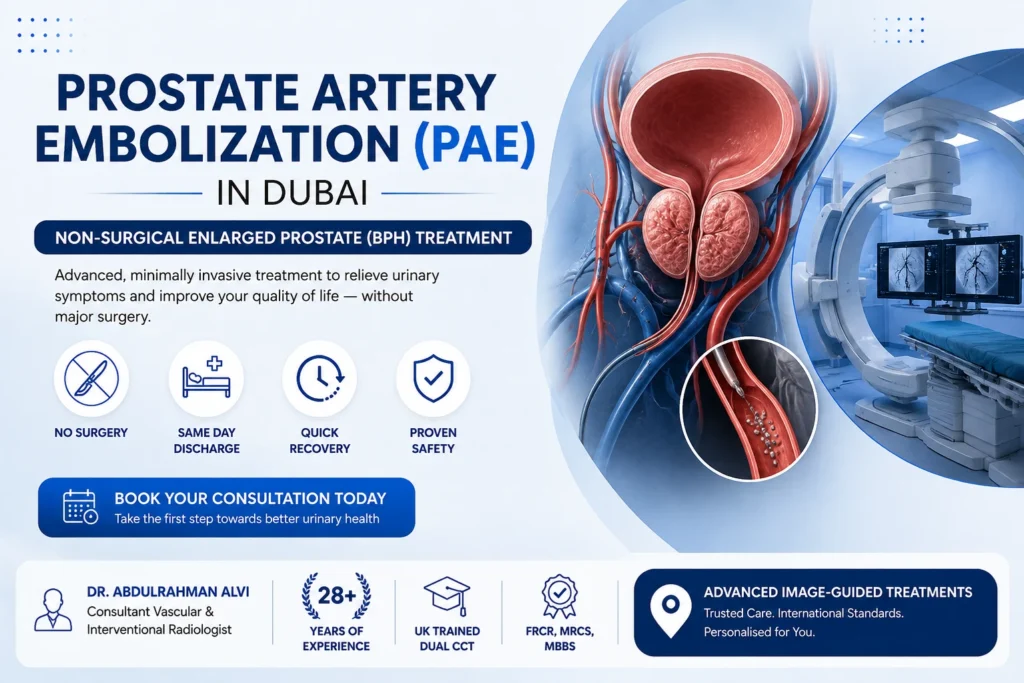
At Dr. AbdulRahman Alvi’s clinic in Dubai, we offer Prostate Artery Embolization (PAE)—an advanced, minimally invasive treatment that relieves urinary symptoms without the need for traditional prostate surgery.
Unlike conventional surgical procedures, PAE is performed through a tiny catheter using advanced image-guided technology, allowing many patients to return home the same day with a shorter recovery period.
Whether you’ve recently been diagnosed with BPH, your medications are no longer effective, or you’re looking for an alternative to surgery, Dr. AbdulRahman Alvi provides personalised treatment plans using the latest interventional radiology techniques to help you regain comfort and confidence.
An enlarged prostate can develop gradually, making it easy to overlook the early warning signs. Over time, however, these symptoms often become more frequent and disruptive.
You should consider seeing a specialist if you experience:
✓ Frequent urination during the day
✓ Waking several times at night to urinate
✓ Weak or slow urine flow
✓ Difficulty starting urination
✓ Feeling that your bladder never completely empties
✓ Sudden or urgent need to urinate
✓ Stopping and starting while urinating
✓ Recurrent urinary tract infections caused by incomplete bladder emptying
✓ Reduced quality of sleep because of nighttime urination
These symptoms are commonly associated with Benign Prostatic Hyperplasia (BPH). Although BPH is not cancer, it can significantly affect your daily life if left untreated.
Early diagnosis allows for more treatment options and may help you avoid complications such as urinary retention, bladder damage, or kidney problems.
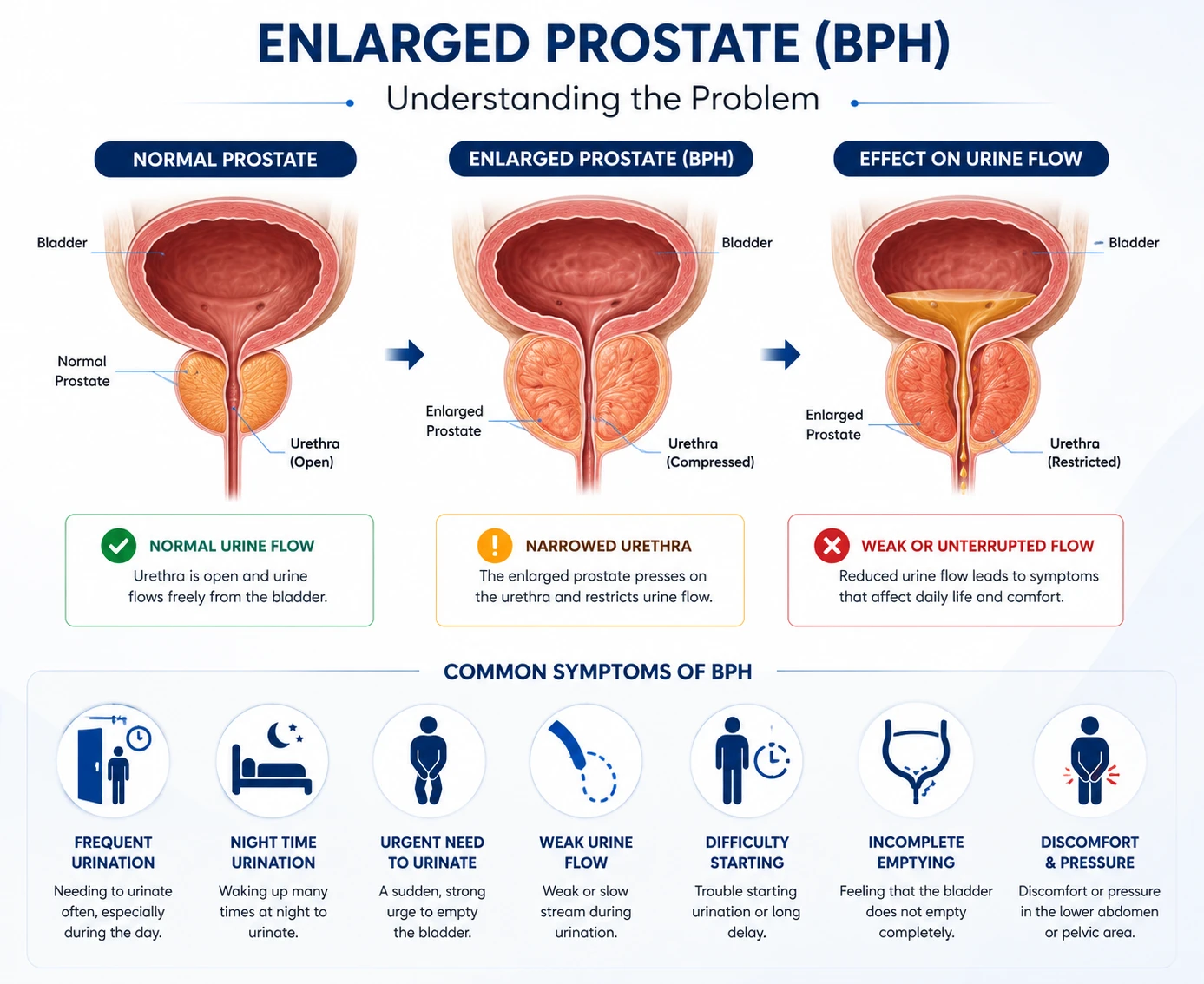
Benign Prostatic Hyperplasia (BPH) is a non-cancerous enlargement of the prostate gland that commonly occurs as men age.
The prostate sits just below the bladder and surrounds the urethra—the tube that carries urine out of the body. As the prostate enlarges, it gradually presses against the urethra, restricting the normal flow of urine.
This pressure can make it difficult to empty the bladder completely, leading to symptoms such as frequent urination, weak urine flow, urgency, and interrupted sleep.
Although BPH is a natural part of ageing for many men, it should not be ignored. Persistent urinary symptoms can reduce your quality of life and may worsen over time if left untreated.
Fortunately, advances in interventional radiology now offer effective treatment options that do not require major surgery.
Unlike procedures that remove prostate tissue, PAE works by reducing the blood supply to the enlarged prostate. As the prostate gradually shrinks, pressure on the urethra decreases, allowing urine to flow more freely and relieving bothersome urinary symptoms.
Not every patient is a suitable candidate for PAE, which is why a detailed consultation and imaging assessment are essential before treatment.
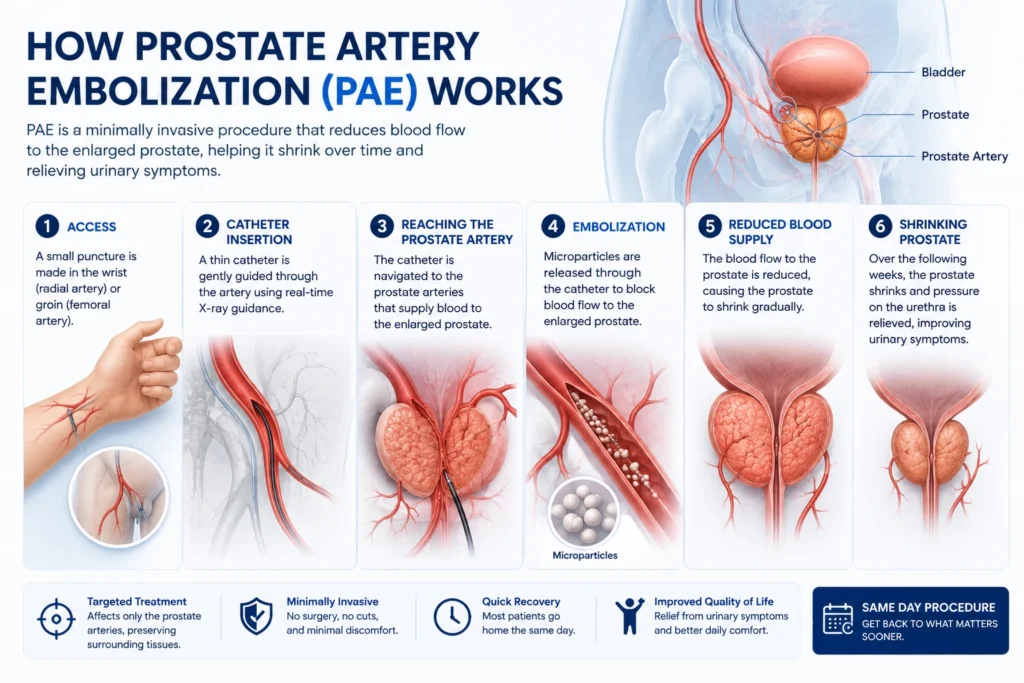
Prostate Artery Embolization (PAE) is an advanced, minimally invasive treatment for Benign Prostatic Hyperplasia (BPH), commonly known as an enlarged prostate. It is designed to relieve urinary symptoms without the need for traditional prostate surgery.
Instead of removing prostate tissue, PAE works by reducing the blood supply to the enlarged prostate gland. As the blood flow decreases, the prostate gradually shrinks over the following weeks, relieving pressure on the urethra and improving urinary function naturally.
The procedure is performed by a Consultant Vascular & Interventional Radiologist using advanced image-guided technology, allowing highly precise treatment through a tiny catheter inserted into an artery in the wrist or groin.
For many men, PAE offers an effective alternative to surgery with less discomfort, a shorter recovery, and a quicker return to normal life.
The prostate depends on a network of small arteries to receive oxygen and nutrients. As the prostate enlarges, these arteries continue supplying blood that supports its growth.
During Prostate Artery Embolization, tiny biocompatible particles are carefully delivered into the arteries supplying the prostate. These particles reduce the blood flow to the enlarged prostate tissue while preserving blood supply to surrounding organs.
Over time, the prostate naturally becomes smaller, reducing pressure on the urethra and allowing urine to flow more freely.
As the prostate shrinks, many patients experience:
Unlike traditional surgery, there are no surgical cuts, no stitches, and no removal of prostate tissue.
One of the most common questions patients ask is, “What should I expect during PAE?”
The procedure is straightforward and is usually completed as a day-case treatment, allowing most patients to return home the same day.
Your journey begins with a comprehensive consultation. Dr. AbdulRahman Alvi will review your symptoms, medical history, medications, previous investigations, and imaging studies to confirm whether PAE is the right treatment for you.
If additional investigations are required, these may include ultrasound, CT angiography, MRI, blood tests, or urine analysis to evaluate the size of the prostate and its blood supply.
On the day of your procedure, local anaesthesia is administered to numb the treatment area. Most patients remain awake throughout the procedure, although light sedation may be provided if needed to help you relax.
Because general anaesthesia is usually not required, recovery is often faster and more comfortable.
A tiny puncture is made in either the radial artery (wrist) or the femoral artery (groin).
Using advanced X-ray guidance, a very thin catheter is carefully navigated through the blood vessels until it reaches the arteries supplying the prostate.
Patients generally experience little discomfort during this stage of the procedure.
Once the catheter is correctly positioned, tiny embolic particles are released into both prostatic arteries.
These particles reduce blood flow specifically to the enlarged prostate while protecting surrounding tissues.
The entire procedure is performed with real-time imaging, ensuring a high level of precision and safety.
After the procedure, the catheter is removed and gentle pressure is applied to the puncture site.
Most patients remain under observation for a short period before being discharged home on the same day.
Recovery is generally quicker than conventional prostate surgery, and many patients return to normal daily activities within a few days, depending on individual recovery.
Not every patient with an enlarged prostate requires surgery, and not every patient is suitable for Prostate Artery Embolization. A detailed specialist assessment is essential to determine the most appropriate treatment.
You may be a suitable candidate if you:
During your consultation, Dr. AbdulRahman Alvi will assess your symptoms, prostate size, medical history, and imaging results to determine whether PAE is the most appropriate treatment for your condition.
Many men choose Prostate Artery Embolization because it offers an effective, minimally invasive alternative to surgery while allowing them to return to their normal routine more quickly.
✔ Minimally invasive treatment
✔ No surgical incision
✔ No stitches
✔ Usually performed under local anaesthesia
✔ Same-day discharge for most patients
✔ Minimal blood loss
✔ Faster recovery than many surgical procedures
✔ Lower reported risk of certain sexual side effects compared with traditional surgery in appropriately selected patients
✔ Suitable for many patients who wish to avoid major surgery
✔ Performed by a UK-trained Consultant Vascular & Interventional Radiologist using advanced image-guided technology
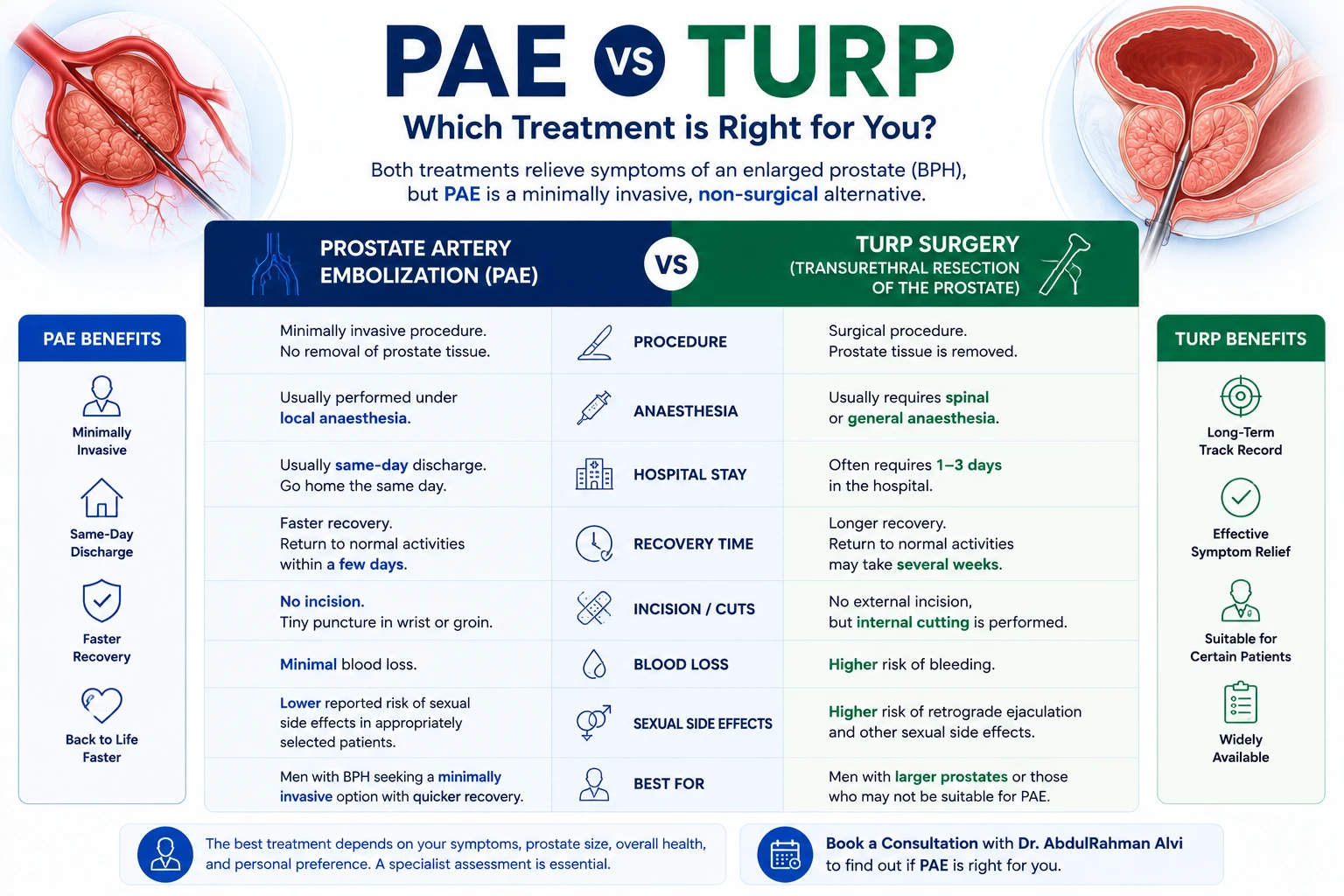
Choosing between Prostate Artery Embolization (PAE) and Transurethral Resection of the Prostate (TURP) depends on your symptoms, prostate size, overall health, and treatment goals. While TURP has long been considered a standard surgical treatment for BPH, many patients now prefer PAE because it is less invasive and offers a quicker recovery.
| Feature | Prostate Artery Embolization (PAE) | TURP Surgery |
|---|---|---|
| Procedure | Minimally invasive | Surgical |
| Incision | No | No external incision, but tissue is surgically removed |
| Anaesthesia | Usually Local | Usually Spinal or General |
| Hospital Stay | Usually Same Day | Often 1–3 Days |
| Recovery | Faster | Longer |
| Blood Loss | Minimal | Higher |
| Prostate Tissue Removal | No | Yes |
| Return to Daily Activities | Usually Within Days | Often Takes Longer |
The most suitable treatment can only be determined after a specialist assessment. Dr. AbdulRahman Alvi will explain the benefits and limitations of each option and recommend the treatment best suited to your individual needs.
One of the key advantages of Prostate Artery Embolization (PAE) is its shorter recovery time compared with many traditional surgical treatments for an enlarged prostate.
Since the procedure is performed through a tiny catheter rather than a surgical incision, most patients experience minimal discomfort and are able to return home on the same day.
Although every patient recovers differently, most men notice gradual improvement over the following weeks as the prostate naturally shrinks and pressure on the urethra decreases.
First 24 Hours
First Week
2–6 Weeks
1–3 Months
Regular follow-up appointments allow your progress to be monitored and ensure the best possible outcome.
Choosing an experienced specialist is just as important as choosing the right treatment.
Dr. AbdulRahman Alvi is a UK-trained Consultant Vascular & Interventional Radiologist in Dubai with over 28 years of international clinical experience in advanced image-guided procedures. He is among the few specialists with extensive expertise in minimally invasive embolization techniques used to treat a wide range of vascular and non-vascular conditions.
✔ MBBS, MRCS, FRCR, CCT (UK)
✔ Dual CCT in Interventional & Clinical Radiology
✔ 28+ Years of International Clinical Experience
✔ Consultant Vascular & Interventional Radiologist in Dubai
✔ Expert in Image-Guided Minimally Invasive Treatments
✔ Personalised Treatment Plans for Every Patient
✔ Advanced Technology with International Standards of Care
✔ Patient-Focused Approach with Honest Medical Advice
From your first consultation through to your recovery, every stage of your care is tailored to your individual condition, ensuring that you receive the most appropriate treatment based on your symptoms, imaging findings, and overall health.
One of the most common questions patients ask is:
The cost of PAE varies from one patient to another because every treatment plan is personalised.
Several factors influence the overall cost, including:
Following your consultation and imaging review, you will receive a personalised treatment plan along with a clear explanation of the expected costs and available payment or insurance options.